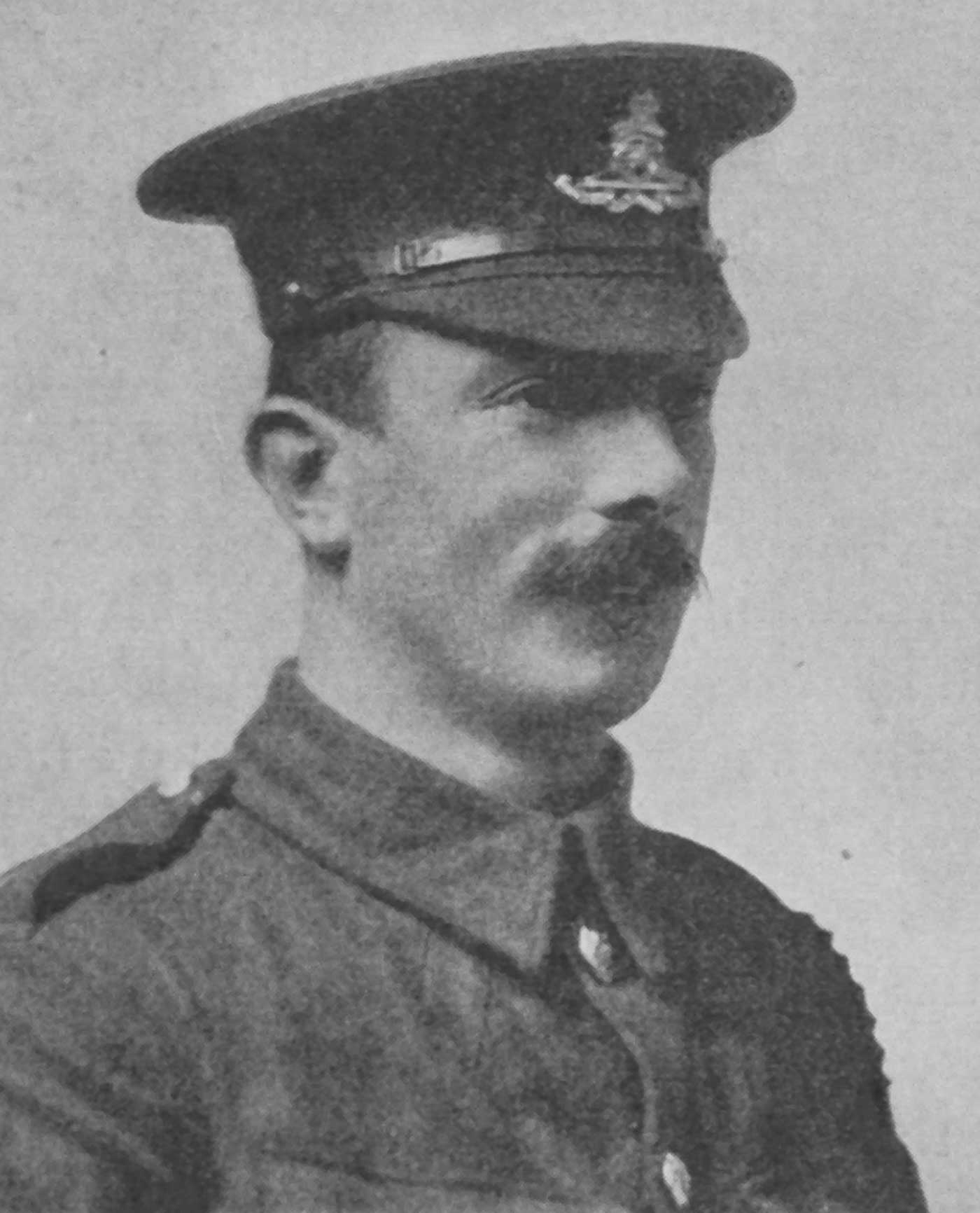
Sergeant-Major John Crawshaw Raynes (1887 - 1929)
| Name | John Crawshaw RAYNES |
|---|---|
| Rank | Battery Sergeant-Major |
| Force | 'A' Bty Royal Field Artillery 71st Brigade |
| VC won |
France, 11 October 1915 |
| London Gazette | 18 November 1915 |
| Born | 28 April 1887, Ecclesall, Sheffield |
| Died | 12 November 1929, Chapeltown, Leeds |
| Grave | Harehills Cemetery, Leeds |
| Location of VC | Royal Artillery Museum, Woolwich, London |
The award citation for the Victoria Cross cites the following
"No. 36380. Sergeant-Major J. C. Raynes, (Royal Field Artillery). For most conspicuous bravery and devotion to duty. On 11th Oct., 1915, at Fosse 7 de Bethune, his Battery was being heavily bombarded by armour-piercing and gas shells. On "Cease Fire" being ordered Sergeant-Major (then Acting Sergeant) Raynes, went out under an intense shell fire to assist Sergeant Ayres, who was lying wounded forty yards away. He bandaged him and returned to his gun, when it was again ordered into action. A few minutes later "Cease Fire" was again ordered owing to the intensity of the enemy fire, and Sergeant-Major Raynes, calling on two gunners to help him – both of whom were killed shortly afterwards – went out and carried Sergeant Ayres into a dug-out. A gas shell burst at the mouth of the dug-out, and Sergeant-Major Raynes, once more ran across the open, fetched his own smoke helmet, put it on Sergeant Ayres, and then, himself badly gassed, staggered back to serve his gun. On 12th Oct., 1915, at Quality Street, a house was knocked down by a heavy shell, four men being buried in the house and four in the cellar. The first man rescued was Sergeant-Major Raynes, wounded in the head and leg, but he insisted on remaining under heavy shell fire to assist in the rescue of all the other men. Then, after having his wounds dressed, he reported himself immediately for duty with his Battery, which was again being heavily shelled."
The citation appeared in a supplement to The London Gazette dated 18th November 1915 (11449). John was invested with his Victoria Cross by King George V at Buckingham Palace on the 4th December 1915.
John initially enlisted into the Army on 10th October 1904, joining the RGA. He transferred to the RHA/RFA a year later. He left the Army in 1912 but had already transferred to the Section B Reserves as a Bombardier two years earlier. He was recalled to the colours on 5th August 1914 and was posted to 'A' Battery Royal Field Artillery 71st Brigade (A/LXXI Brigade). After the award of the VC he was sent back to England and never returned to the Front.
The Times dated 23rd November 1915 gives a brief mention of John
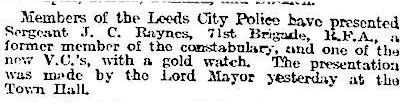
According to his local vicar he was severely wounded at Loos. He spent the rest of the war with reserve and training units. He was discharged from the Army on 11th December 1918 as "physically unfit". The only other piece of information I have for John at that time is that he was initiated into the Freemasons on 2nd November 1916
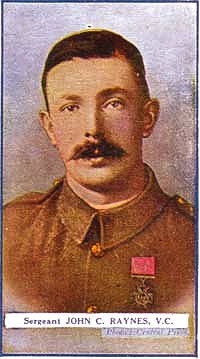
John as featured in a series of Gallagher Cigarette Cards
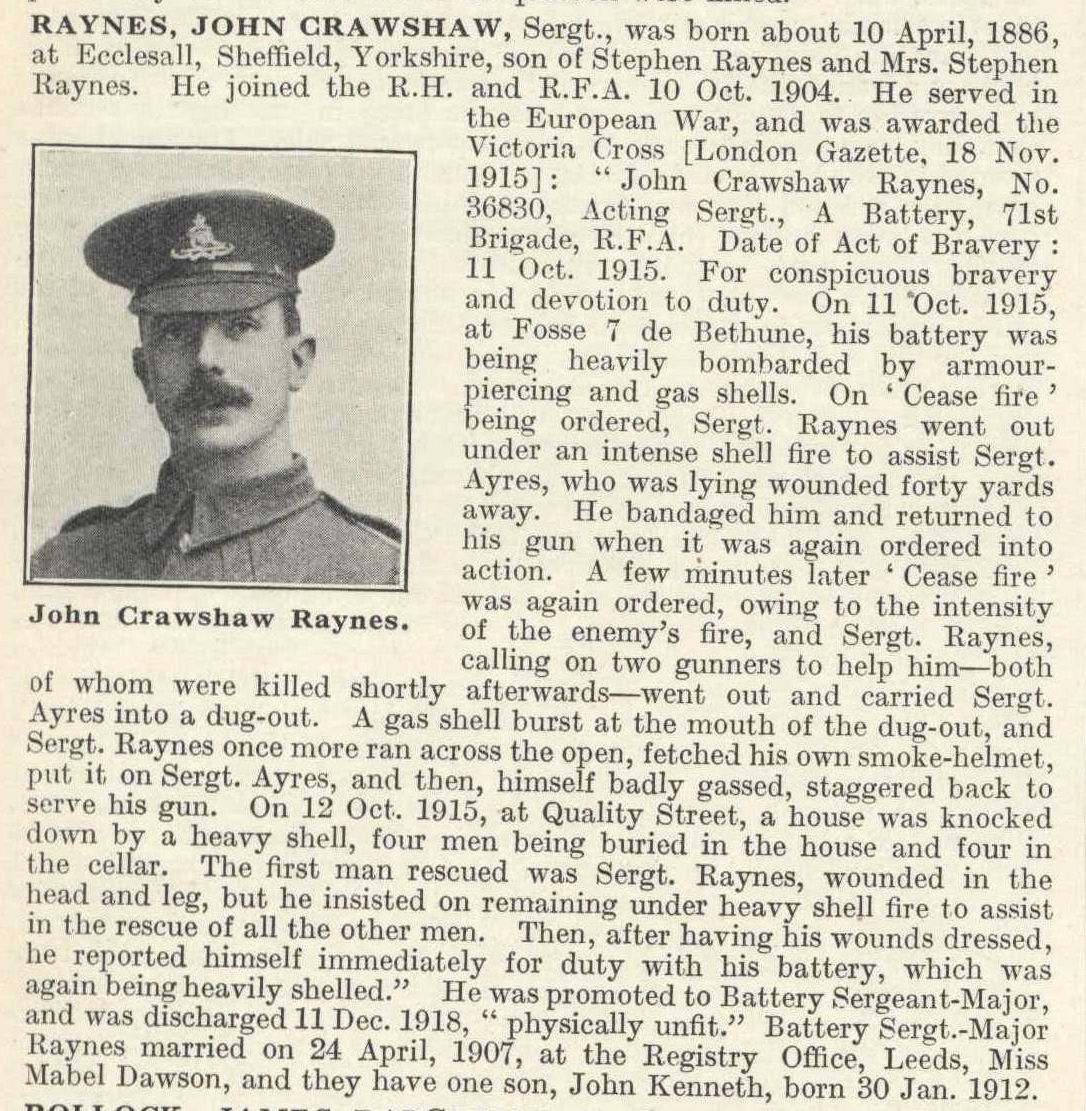
From Victoria Cross Awards 1856 - 1920
After his discharge from the Army he returned to the Leeds City Police and was promoted to Sergeant. However John found it increasingly difficult to fulfill his duties due to the nature of the injuries he had sustained whilst fighting for his country.
He finally retired from the police in 1926 and according to his obituary that appeared in The Times (14th November 1929) he was bed ridden with paralysis for the final three years of his life and had to rely on his wife for constant support and nursing. The difficulties John had were spinal injuries, which deteriorated to the extent that he was paralyzed in his legs. Max Arthur in his recently published book on VC holders also mentions that John had periods of depression in the final years of his life.
John missed the Victoria Cross reunion dinner on Saturday, 9th November 1929 in The Royal Gallery, House of Lords, Palace of Westminster, London but he received a telegram from his fellow Yorkshire VC holders on Monday 11th November conveying their greetings and expressing their regret that he could not complete the party. He also had a visit from the new Lord Mayor of Leeds Mr. N. G. Morrison on the same day.
Two days later on Tuesday 12th November 1929 John died at his home in Grange Crescent, Chapeltown, Leeds at the young age of 42 leaving a wife and family.
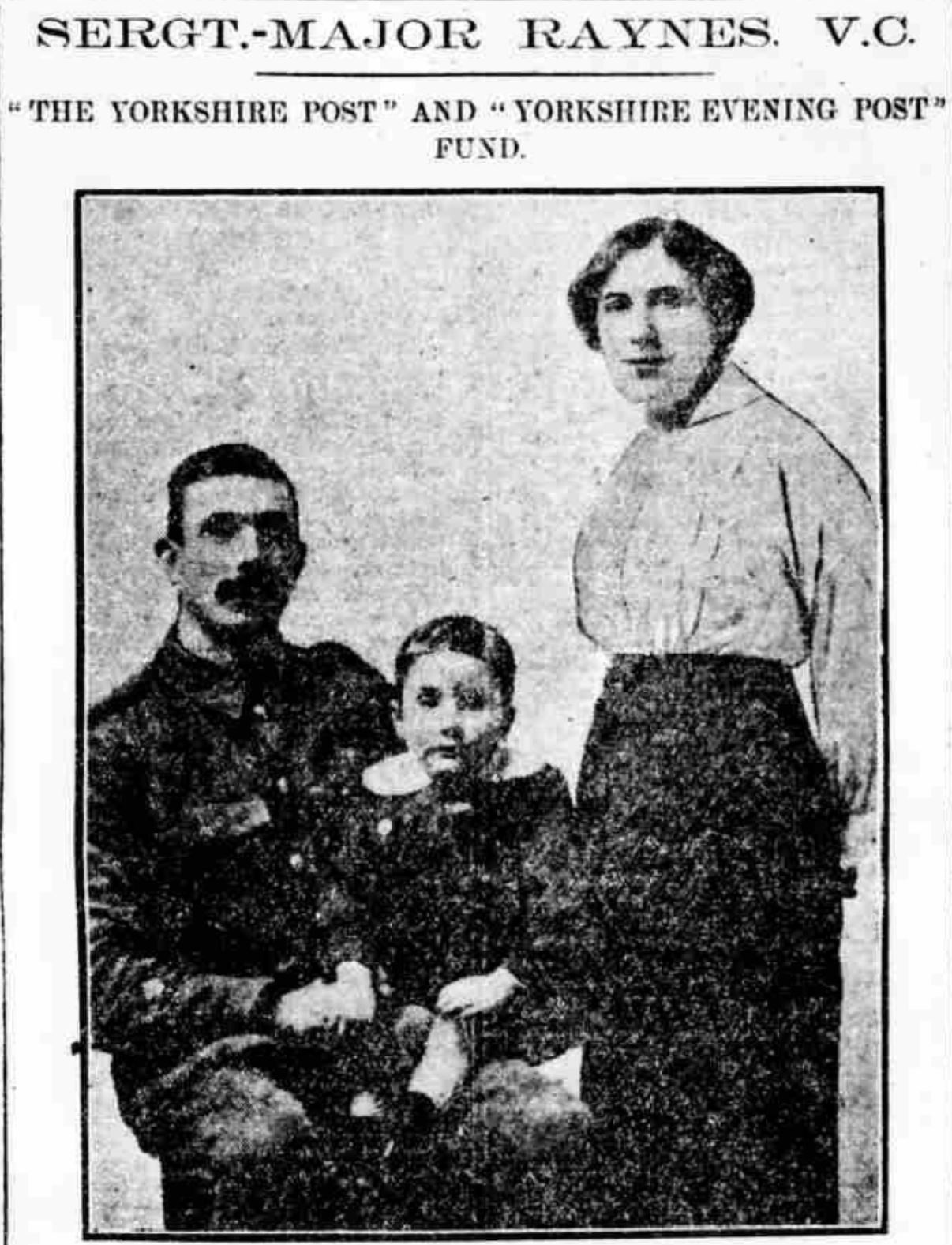
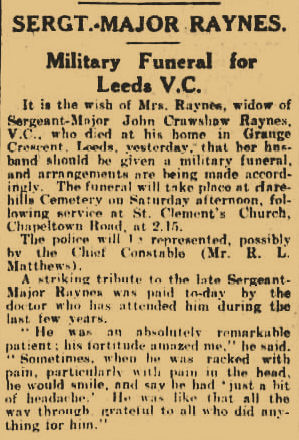
The Yorkshire Evening Post dated Thursday 14th November 1929 carried this report
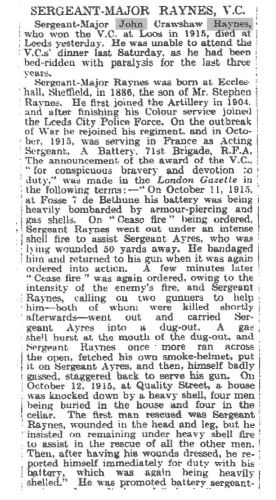
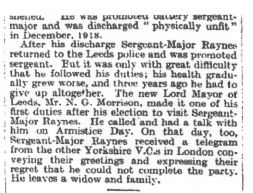
And on the same day,Thursday 14th November 1929, John's obituary appeared in The Times newspaper
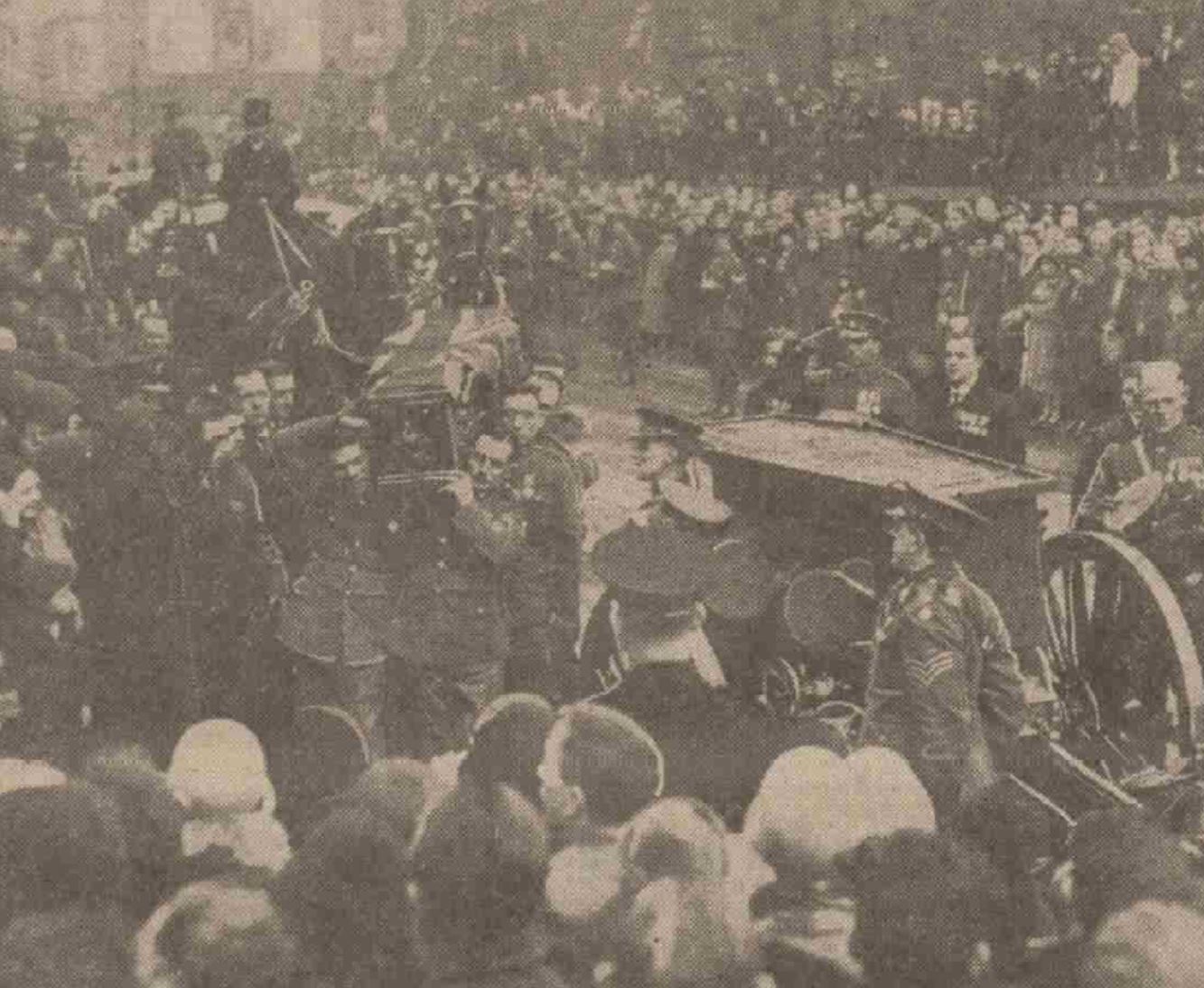
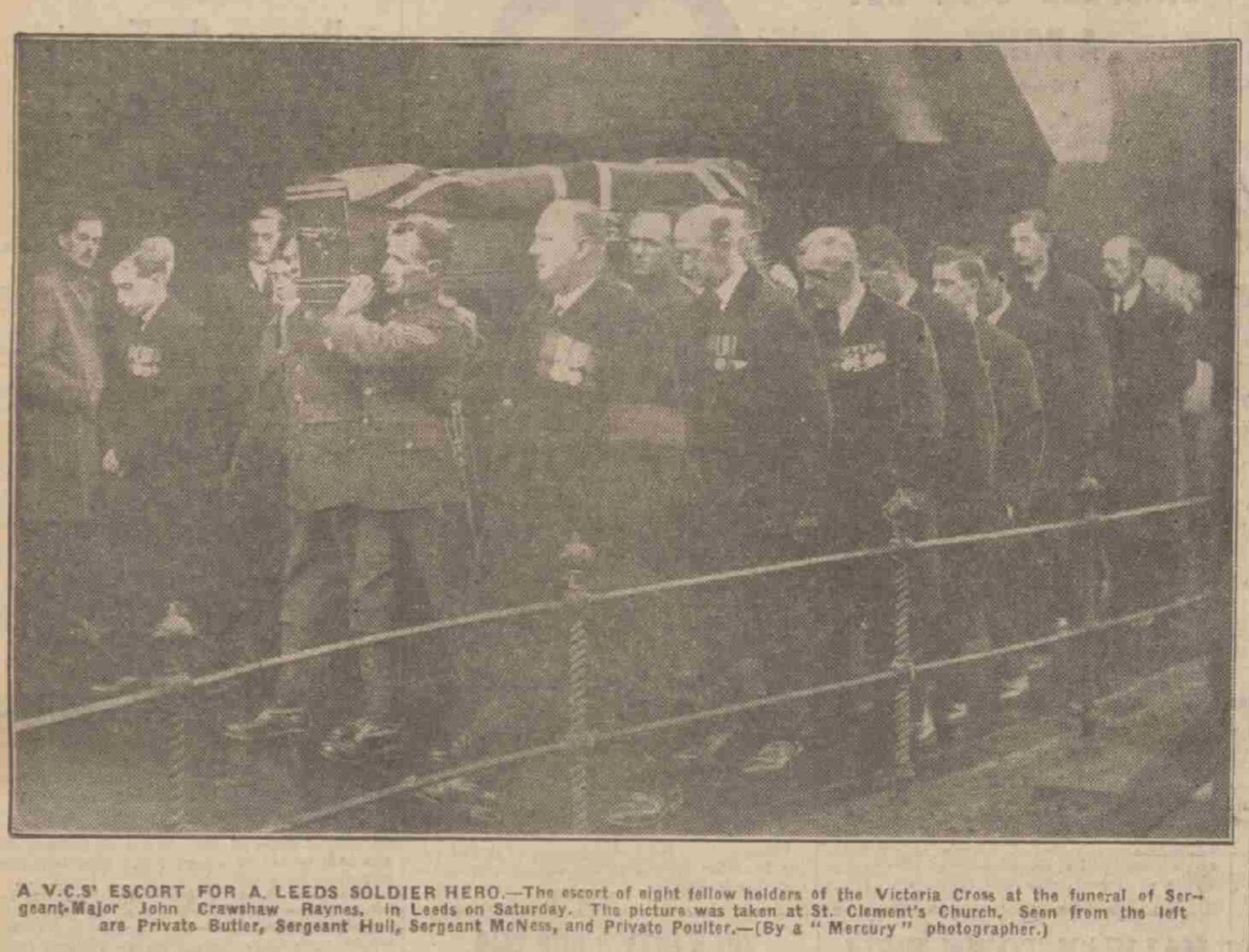
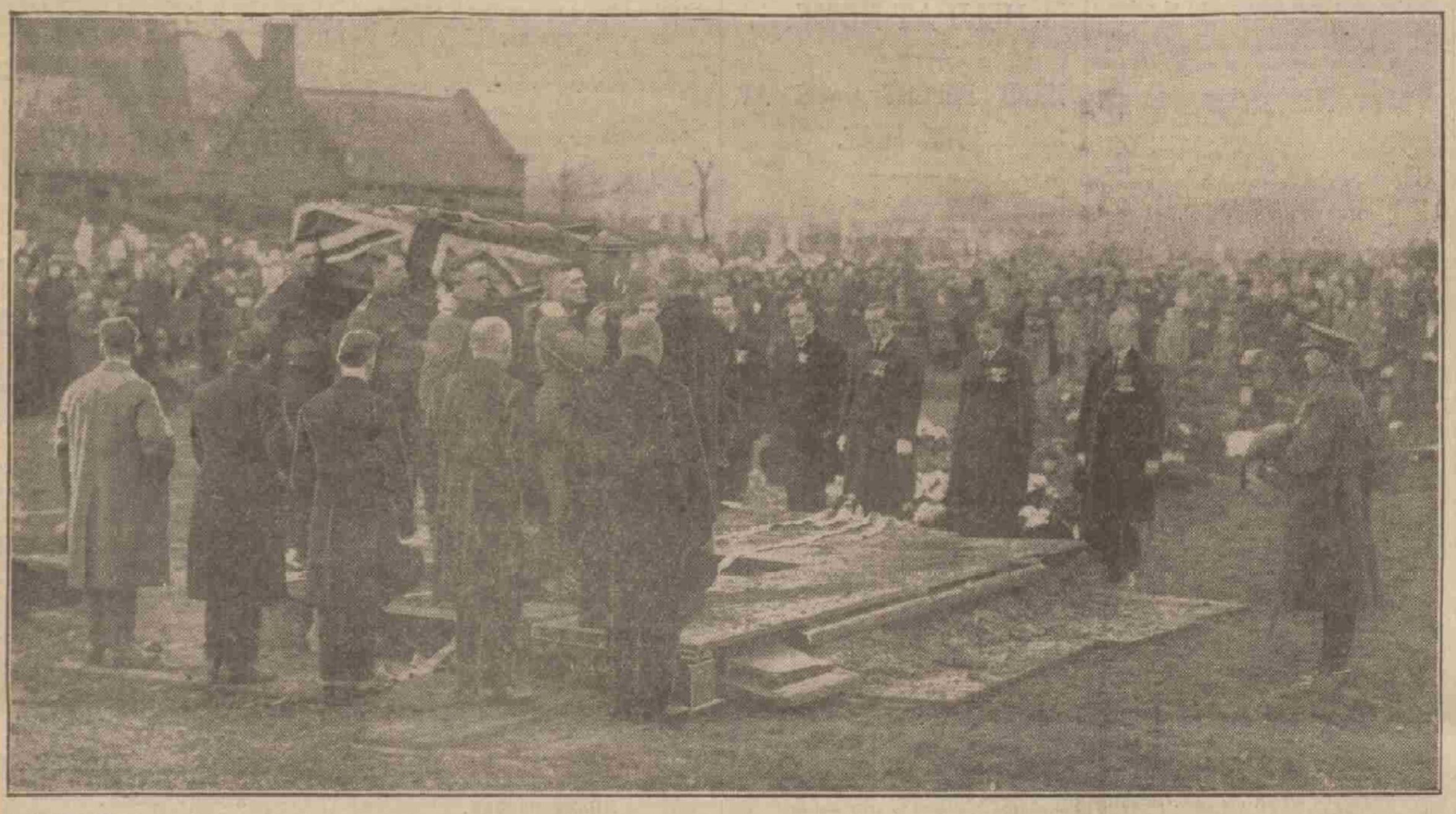
Details of John's funeral that took place on Saturday 16th November 1929 are as follows
"His funeral took place in the presence of nineteen
Victoria Cross recipients, eight of which were Yorkshire VC. Holders. The
Yorkshire VC’s were; Captain George Sanders, Lieutenant Wilfred Edwards,
Sergeant Fred McNess, Sergeant Charles Smith Hull, Sergeant Albert Mountain,
Lance Corporal Frederick W Dobson, Private Arthur Poulter, Private William
Boynton Butler who were acting as pallbearers. The 71st Field Brigade Royal
Artillery provided the gun carriage that carried the coffin of Mr Raynes,
followed by the chairman of the LEEDS “Old Contemptibles Association”, Captain
W.E. Gage, carrying a purple cushion with JCR’s medals upon it a wreath of
Flanders poppies and evergreen in the shape of a Victoria Cross was carried by
Lieutenant Edwards.
The wreath was intended as a souvenir for JCR from the VC Dinner at the House of
Lords. The wreath bore the message “In affectionate memory from brother VC’s of
Leeds, who sorely missed their comrade at the Prince of Wales’s dinner, whence
this emblem was brought for him.” Mr Raynes was intended to go to the dinner but
he had to give his apologies, he asked if his son John Kenneth, age 18 would be
able to take his place.
Mr Raynes received a telegram on Armistice Day from the other Yorkshire VC’s who
attended the dinner, stating that they regretted that he could not attend and
complete the party, sending their greetings. They promised him a memento of the
dinner, (the VC shaped wreath). The service was held at St Clement’s Church,
with the Lord and Lady Mayor and the Chief Constable in attendance, along with a
squad of police.
He was buried at Harehills Cemetery, Leeds. A firing squad was arranged and
provided by the West Yorkshire Regiment and the Last Post was sounded. The
cemetery gates had to be closed due to the amount of people that were there to
pay their respects, an estimated 25 to 30,000. So was the popularity of this
brave man.
The story of John Crawshaw Raynes and his actions gaining him the V.C. appeared
in the Yorkshire Evening Post in 1972 after the discovery of an unknown V.C.
portrait. It was soon found to be the portrait of Sgt-Major Raynes. His
daughter-in-law, who held the V.C. at the time, asked for the picture to be
forwarded to the regimental museum".
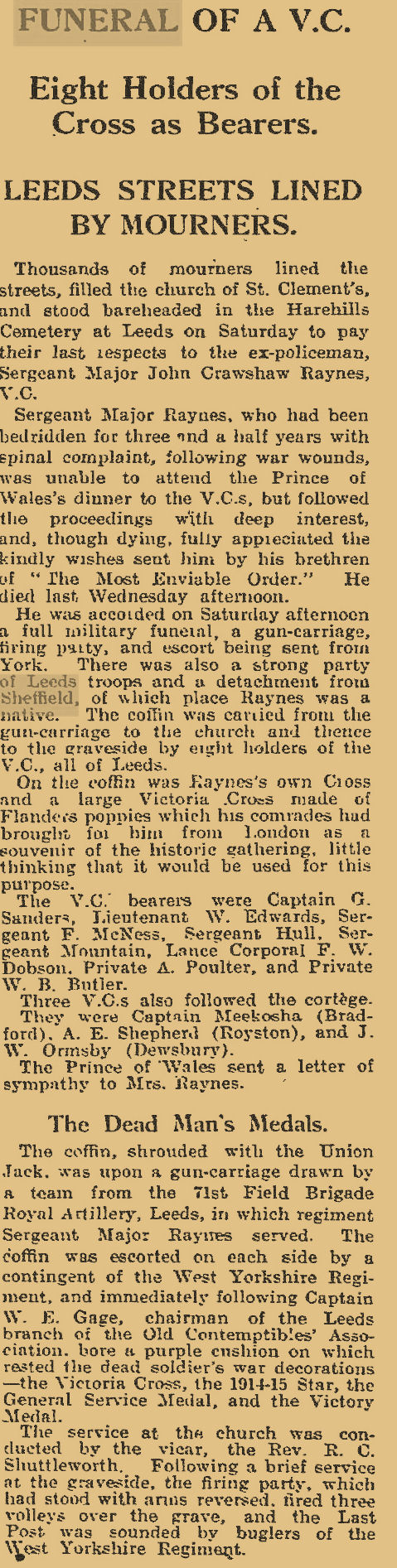
The above report is from The Manchester Guardian dated 18th November 1929,
The Times dated November 18th 1929 also contained an article on John's funeral under the title
FUNERAL OF LEEDS V.C.
INTENDED SOUVENIR AS WREATH
The funeral was held on Saturday at Leeds- of ex-Sergeant-Major J. C. Raynes, the Leeds V.C.. who was paralysed from War wounds and unable to attend the Prince of Wales's dinner. Between 25,000 and 30,000 people assembled. Eleven V.Cs were present, and full military honours paid. The other eight Leeds V.C.s acted as pallbearers. The coffin rested on a gun-carriage supplied with a team from the 71st Field Brigade R.A. and was followed by Captain W. E. Gage (chairman of the Leeds " Old Contemptibles "), who bore on a purple cushion Sergeant-Major Raynes's V.C., 1914-15 Star, General Service Medal, and Victory Medal. A wreath of Flanders poppies and evergreens in the shape of a Victoria Cross, which Lieutenant Edwards, V.C., brought from the House of Lords, had been intended as a souvenir. It bore the following message--" In affectionate memory from brother V.C.s of Leeds, who sorely missed their comrade at the Prince of Wales's dinner, whence this emblem was brought for him." The service at St. Clement's was attended by' the Lord Mayor and Ladv Mayoress of Leeds, the Chief Constable, and a squad of police. Last Post was sounded at Harefields Cemetery amid a dense crowd.
Incidentally the eight pallbearers were other Yorkshire recipients of the Victoria Cross - Captain George Sanders VC MC, Lieutenant Wilfred Edwards VC, Sergeant Frederick McNess VC, Corporal Charles Hull VC, Sergeant Albert Mountain VC, Lance Corporal Frederick Dobson VC, Private Arthur Poulter VC and Private William Butler VC.
But the most comprehensive report I have come across was in the Yorkshire Evening Post dated 16th November 1929

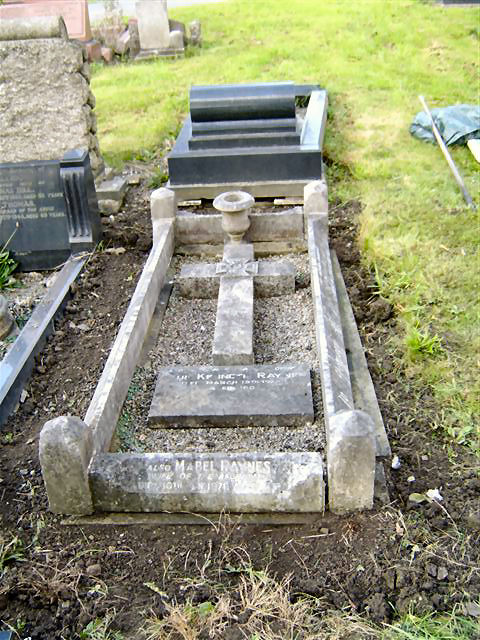
For anyone who wishes to pay their respects to John in Harehills Cemetery, Leeds the grave reference is Section H Grave 11 which is situated just behind the Chapel. The grave was renovated in November 2008, and a rededication service held on 13th November 2008
Additional information:
John was the son of Mr. and Mrs. Stephen Raynes of Sheffield and was born in the city on 28th April 1887. He married Mabel Dawson at the Leeds Registry Office (Leeds : RB/159/149) on the 24th April 1907. They had one son that I know of - John Kenneth who was born on 30th January 1912. (the reference I noted however gives a date of birth in 1911 - WEST/283/6 in West Leeds). There may have been another son Thomas who was born circa 1925.There is a photograph of John in the Sheffield Daily Independent - the caption states that prior to enlisting in 1914 John was serving with the Leeds City Police
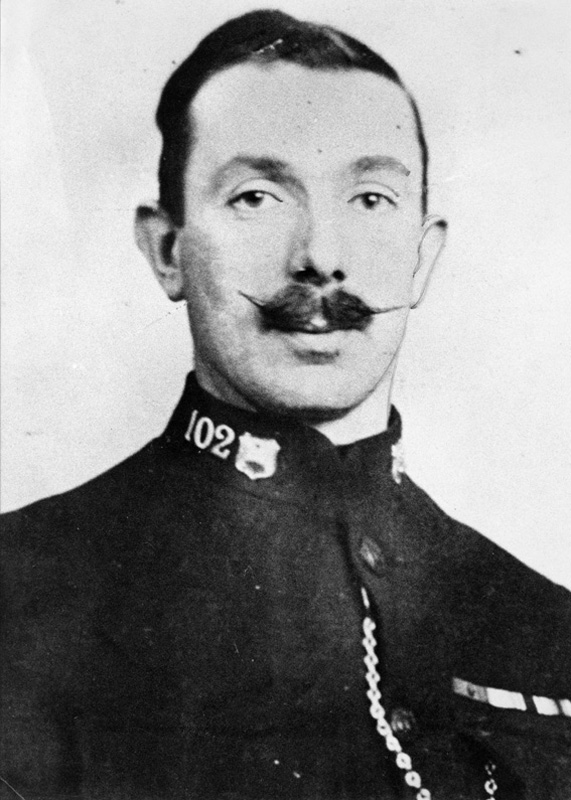
John Raynes circa 1914 (courtesy of mig_r)
At the time of the VC award, John was an Acting Sergeant but he later achieved the rank of Battery Sergeant-Major. In his book "Fifty Years of Church Life 1866 - 1916" (Chapter 5 Heeley and The War) the Reverend W. Odom refers to Christ Church Heeley and records that John Raynes
"was an old scholar of our Day and Sunday Schools, a member of our Boys' Brigade – Sergeant-Major J. C. Raynes, who, on his recovery, visited his old school, received a warm welcome from the vicar, teachers, and scholars, and in a simple, unassuming manner, after handing round his V.C. to the scholars, offered a few words of advice to the lads. He was severely wounded at Loos..."
This confirms the information in 1901 Census which has John transcribed as a thirteen year old boy living in the Heeley district of Sheffield.
Dwelling: 25 Gleadless Road, Heeley, Sheffield
PRO Ref : RG13/4359 page 47
| SURNAME | FORENAME | Age | Rel | Occupation | Place of Birth | County of Birth |
| RAYNES | Stephen H | 40 | Head | Publican | Liverpool | Lancs |
| RAYNES | Hannah E | 40 | Wife | Sheffield | Yorkshire | |
| RAYNES | John C | 13 | Son | Sheffield | Yorkshire | |
| RAYNES | Mary H | 11 | Daughter | Sheffield | Yorkshire | |
| RAYNES | Elizabeth W | 9 | Daughter | Sheffield | Yorkshire | |
| RAYNES | Frank C | 5 | Son | Sheffield | Yorkshire |
His father Stephen who was born in Liverpool in
the June quarter of 1862 (GRO ref Vol 8b Page 205) In the 1881 Census, he is a
railway clerk lodging with a family called Thelwell
Source Information: Dwelling 3 Offa Terrace Census Place Bersham, Denbigh,
Wales
Family History Library Film 1342327 Public Records Office Reference RG11 Piece /
Folio 5520 / 123 Page Number 37
Household Record 1881 British Census
Name Relation Marital Status Gender Age Birthplace Occupation Disability
William THELWALL Head M Male 56 Halghton, Flint, Wales Railway Porter
Mary A. THELWALL Wife M Female 54 Norhwood, Shropshire, England
Esther THELWALL Daur U Female 22 Penley, Flint, Wales
Stephen H. RAYNES Boarder U Male 18 Liverpool, Lancashire, England Railway Clerk
Twenty years later was at the time of the 1901 Census Stephen was a local publican in Sheffield. John's mother Hannah also aged 40 came from Sheffield.
In fact there is a record of their marriage in the Wortley district of the West Riding in the March quarter of 1886 - Stephen Henry Raynes and Harriet Elizabeth Crawshaw (Wortley PRO Ref volume 9c page 251).
More importantly though there is also a record of John's younger sister Elizabeth in the Parish Registers of Heeley Church. The baptism of Elizabeth took place on 23rd December 1891 and the entry is as follows
"23. Elizabeth Winifred, daughter of Stephen Henry and Hannah Elizabeth RAYNES, 25 Gleadless Road.
which is confirmed in the Free BMD Indexes - Births December 1891 Raynes Elizabeth Winifred Ecclesall Bierlow. Volume 9c Page 450
Incidentally Elizabeth Winifred Raynes married Clifford Speight on 20th December 1915 in the District Register Office of Ecclesall Bierlow. They had three children, Geoffrey Dickinson Speight, Stanley Lester Speight and Brenda Margaret Speight.
His other sister Mary is also recorded - Births September 1889 Raynes Mary Hannah Sheffield Volume 9c Page 533 She married a William Ratcliffe - Marriages December 1913 Raynes Mary H Ecclesall Bierlow. Volume 9c Page 773
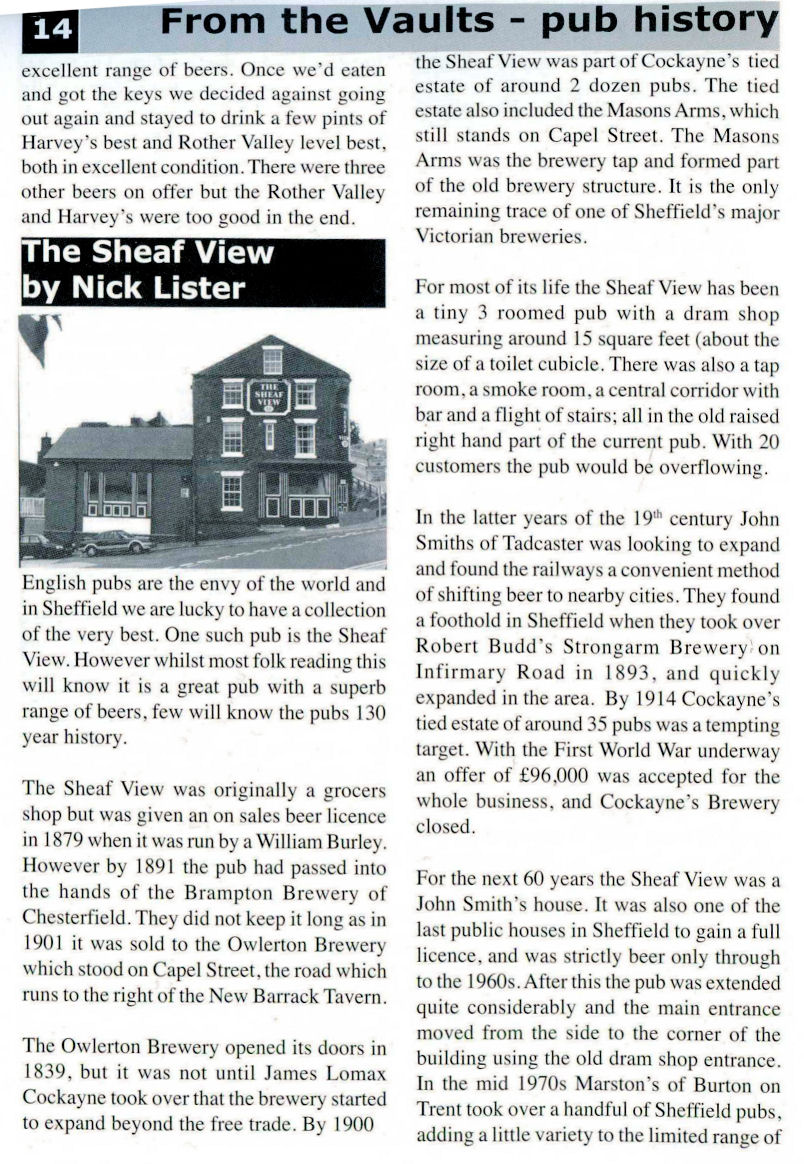
John's parents must have moved to the Heeley district soon after their marriage in 1886. The address in the register is that of the The Sheaf View Hotel in Heeley which still exists. John's father was the landlord of the pub. (see below). According to the "Heghlegh Then and Heeley Now" by The Heeley History Workshop, John's father was granted the licence by the Sheffield Magistrates in 1891. In the application he also discloses that he works as a auctioneers clerk.
The 1911 Census has the following information
Personal Information
Name Stephen Henry Raynes
Relationship to Head of Household Head
Condition Married
Gender Male
Age 50 Estimated Year of Birth 1861
Occupation Painter
Employed Yes Working at Home No
Place of Birth Lancashire Liverpool
Enumerator Information
Address 843 Abbey Dale Road Sheffield Parish Ecclesall Town Sheffield
Type of Building Private House Number of Rooms Five Inhabited Y
Reference RG14PN27797 RG78PN1591 RD509 SD5 ED19 SN357 Administrative County
Yorkshire (West Riding)
Registration District Ecclesall Bierlow Registration Sub District Ecclesall
South Enumeration District 19
Living in the same house were his wife Hannah and 19 year old daughter Elizabeth Winifred who was employed as a shop assistant in a Post Office.
Sadly Stephen never got to see John's Victoria Cross as he died earlier that year at the age of 52 - according to the 1901-1911 censuses Stephen should have been circa 55 years of age at the time of death and not 52 as stated. The 1881 Census details would put him at 52 years of age at the time of death.
Deaths March quarter 1915 - Raynes Stephen H Age 52 Ecclesall Bierlow. Volume 9e Page 603
John's mother Hannah did see the award but she died two years later at the age of 58
Deaths December 1917 Raynes Hannah E Age 58 Sheffield Volume 9c Page 511
But at least they were spared from knowing the following news - a parents worst nightmare
Notes
1. According to one web-site John at the invitation of His Majesty, King George V's attended an Afternoon Party held at Buckingham Palace London 26th June 1920 for the recipients of the Victoria Cross
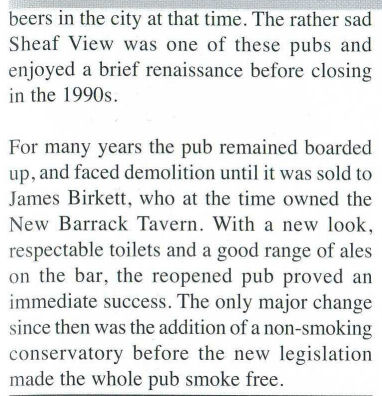
2. A now defunct local website noted the following - " The Sheaf View Hotel has had a mixed existence. It was for many years a beer only licence, but closed when local housing was cleared. It re-emerged, much cleaned up, as a Marston's house, opening and closing again at regular intervals. It then lay derelict for several years. Now under the same management that run the New Barrack Tavern, it has become one of the most popular real ale outlets in Sheffield. (2003)." The premises were initially a grocer's shop opening around 1871 but there was a change in usage and by 1879 it is listed as a beer-house selling beers from the Brampton Brewery.
3. John was awarded his VC for his actions at Fosse 7 de Bethune France. Fosse 7 was a pithead on the road from Bethune to Lens. Used as an artillery site it was heavily involved in what became known as the Battle of Loos. There is a sad postscript to the events of that day. John and Sergeant Ayres were best friends but sadly; despite all of John's efforts, Sergeant Ayres did not survive the gassing and died the same day. His details as recorded on the Register of the Commonwealth War Graves Commission are as follows
| Name: | AYRES, JOHN OSWALD |
|---|---|
| Nationality: | United Kingdom |
| Rank: | Serjeant |
| Regiment/Service: | Royal Field Artillery |
| Unit Text: | "A" Battery. 71st Brigade. |
| Date of Death: | 11/10/1915 |
| Service No: | 9708 |
| Casualty Type: | Commonwealth War Dead |
| Grave/Memorial Reference: | Coll. Grv. II. G. 2a. |
| Cemetery: |
FOSSE 7 MILITARY CEMETERY (QUALITY STREET), MAZINGARBE - Mazingarbe is a village in the Department of the Pas-de-Calais, 10 kilometres south-east of Bethune. From Lens, take the N43 towards Bethune. Arriving at Mazingarbe take the first road on your left. The cemetery is 200 metres on the right. |
There is I believe in existence a letter to John from
John Ayres parents who wrote and thanked John for trying to save their
son. They also congratulated him on being awarded the V.C. The Ayres family were from
Worthing, Sussex. John Ayres was just 18 years old when he died

In August 2012 I received an interesting e-mail from the grandson of John
" My grandfather was John Oswald Ayres and in your
information you say he was 18 when he died but he was born in 1888 and was 27
at his death. He was married in 1911 Worthing and had three children by the time
he died 1911 / 1913 / 1914. One day I will go up to Leeds to pay my respect at
the grave. I have been to the Fosse 7 War Graves Cemetery and found it very
moving"
I am unsure where I obtained the information that John was only 18 when he
died. I checked the 1911 Census and found the following entry
Name John Oswald Ayres
Relationship to Head of Household Head
Condition Married
Gender Male
Age 25 Estimated Year of Birth 1886
Occupation Bricklayer Labourer
Employed Yes Working at Home No Industry Builders
Place of Birth Holy Trinity Worthing Sussex
Enumerator Information Address 22 Surrey Street Parish Worthing
Type of Building Private House Number of Rooms Lodgers Bed Setting Room
Inhabited Y
Reference RG14PN5335 RG78PN238 RD84 SD1 ED16 SN274 Administrative County Sussex
Registration District East Preston Registration Sub District Worthing
Enumeration District 16 Reference Information Folio 559 Page 1 Piece 5335 RD
number 84 SD number 1 ED number 16 Schedule 274
John did marry Mary in the December quarter of 1910 - Surname
First name(s) District Vol Page
Marriages Dec 1910 Ayres John Oswald East. Preston Volume 2b Page 767.
He would according to the records have been 29 when he died,
leaving behind a young family of three children
4. John's Obituary in The Times dated November 14th 1929 under the heading
SERGEANT-MAJOR RAYNES, V.C.
" Sergeant-Major John Crawshaw Raynes, who won the V.C. at Loos in 1915, died at Leeds yesterday. He was unable to attend the V.C.s' dinner last Saturday, as he had been bed-ridden with paralysis for the last three years. Sergeant-Major Raynes was born at Ecclesall, Sheffield, in 1886, the son of Mr. Stephen Ravnes. He first joined the Artillery in 1904. and after finishing his Colour service joined the Leeds City Police Force. On the outbreak of War he rejoined his regiment. and in October, 1915, was serving in France as Acting Sergeant, A Battery. 71st Brigade, R.F.A. The announcement, of the award of the V.C., "for conspicuous bravery and devotion to duty, was made in the London Gazette in the following terms:- `On October 11, 1915, at Fosse 7 de Bethune his battery was being heavily bombarded by armour-piercing and gas shells. On "Ceasefire" heing ordered, Sergeant Raynes, went out under an intense shell fire to assist Sergeant Ayres, who was lying wounded 50 yards away. He bandaged him and returned to his gun when it was again ordered into action. A few minutes later " Cease fie " was again ordered, owing to the intensity of the enemy's fire, and Sergeant Raynes, calling on two gunners to help him-both of whom were killed shortly afterwards-went out and carried Sergeant Ayres into a dug-out. A gas shell burst at the mouth of the dug-out, and Sergeant Ravnes once more ran across the open, fetched his own smoke-helmet, put it on Sergeant Ayres, and then, himself badly gassed, staggered back to serve his gun. On October 12, 1915, at Quality Street, a house was knocked down by a heavy shell, four men being buried in the house and four in the cellar. The first man rescued was Sergeant Raynes, wounded in the head and leg, but he insisted on remaining under heavy shell fire to assist in the rescue of all the other men. Then, after having his wounds dressed, he reported himself immediately for duty with his battery, which was again being heavily shelled." He was promoted battery sergeant- major and was discharged " physically unfit" in December, 1918. After his discharge Sergeant-Major Raynes returned to the Leeds police and was promoted sergeant. But it was only with great difficulty that he followed his duties; his health gradually grew worse, and three years ago he had to give up altogether. The new Lord Mayor of Leeds, 3Mr. N. G. Morrison, made it one of his first duties after his election to visit Sergeant- Major Raynes. He called and had a talk with him on Armistice Day. On that day, too, Sergeant-Major Raynes received a telegram from the other Yorkshire V.C.'s in London conveying their greetings and expressing their regret that he could not complete the party. He leaves a widow and family."
John's Probate

5. Medal entitlement of Battery Sergeant Major John Raynes - 'A' Battery, Royal Field Artillery
6. In June 2008 I received a very interesting e-mail from John's grand-daughter who provided me with some more information. I have edited the e-mail to protect her anonymity.
"I read today your web page regarding my grandfather with much interest. I am the daughter (born July 1941) of his second son, Tom Crawshaw Raynes, who was born on 6 February 1920 and married my mother Joan in 1940. John Kenneth Raynes, (Uncle Ken) was also my godfather. Sadly my father, Tom was killed on his way home on leave from the airforce in 1945. My mother subsequently remarried in 1947.....I believe that I am the only direct blood line of my grandfather.....
My father, Tom, was killed at Kettering in an accident involving a lift he was given in an army jeep. It was reported in the Express I believe at the time. My mother's decision to have him cremated was, I gather, part of the breakdown in relations with my Grandmother Raynes as she would have preferred a burial with his father in Harehills Cemetery."
I checked the Commonwealth War Graves Commission website and found the following entry for her father, and John's son
Name: RAYNES, TOM CRAWSHAW
Initials: T C
Nationality: United Kingdom
Rank: Leading Aircraftman
Regiment/Service: Royal Air Force Volunteer Reserve
Age: 25
Date of Death: 22/08/1945
Service No: 969128
Additional information: Son of John Crawshaw Raynes, V.C., and Mabel Raynes, of
Leeds; husband of Joan Raynes, of Leeds.
Casualty Type: Commonwealth War Dead
Grave/Memorial Reference: Screen Wall. Panel 2.
Cemetery: LEEDS (LAWNS WOOD) CREMATORIUM
As a final footnote, in the summer of 2008, I was contacted by a person from Leeds who read this article on John and volunteered to obtain additional information. As a result of his endeavours, he located John's grave in Harehills Cemetery (Leeds) and found it in rather a neglected condition - see below
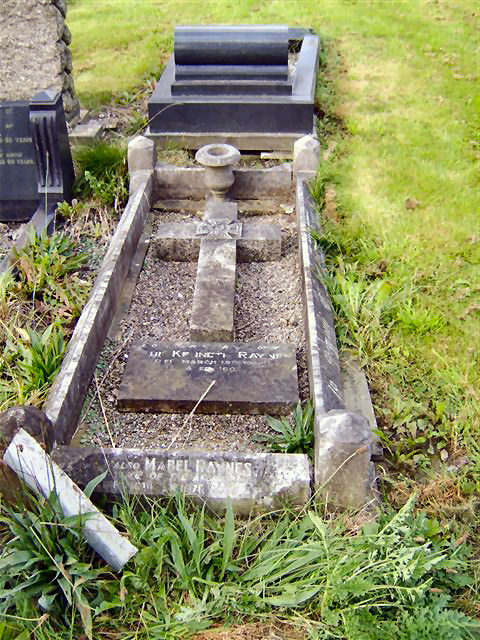
He tidied it up and is now in the process of arranging for the actual inscriptions to be renewed.
7.In May 2011 I accessed the 1911 UK Census and obtained the following information on John
Name John Crawshaw Raynes
Relationship to Head of Household Head
Condition Married
Gender Male
Age 23 Estimated Year of Birth 1888
Occupation Police Constable
Employed Yes
Working at Home No
Industry Leeds City Corporation
Place of Birth Yorkshire Sheffield
Enumerator Information
Address 4 Clay Pit St Leeds Parish Leeds Town Leeds Type of Building Private
House
Number of Rooms Three Inhabited Yes
Reference RG14PN26994 RG78PN1548A RD500 SD3 ED13 SN187 Administrative County
Yorkshire (West Riding)
Registration District Leeds Registration Sub District West Leeds Enumeration
District 13
Ten years later the 1921 UK Census became available and so I accessed John's entry in the schedules. Not surprisingly John was a patient in Leeds General Infirmary
First name(s) John Crawshaw
Address General Infirmary
Last name Raynes
Sex Male
Parish Leeds
Birth year 1887
Registration district Leeds
Census date 19 June 1921
Registration district number 500
Age in years 34
Sub-district West Leeds
Age in months 2
Sub-district number 3
Age as transcribed 34 y 2 m
Enumeration district number 52
Relationship to head Patient
County Yorkshire (West Riding)
Marital status Married
Country England
Birth place Sheffield, Yorkshire, England
Ward of borough or urban district Mill Hill, North
Parliamentary borough or division Leeds PB, Central Div.
Archive series RG 15 Piece number 22134 District reference RD 500 RS 3 ED 52, 53, 54, 55, 56, 57
Occupation Police Sergt Schedule type code E Occupation code with suffix 809/6
Employer Leeds Watch Committee
Other household member's last name -
Employer code 720
Place of work Leeds
House name General Infirmary
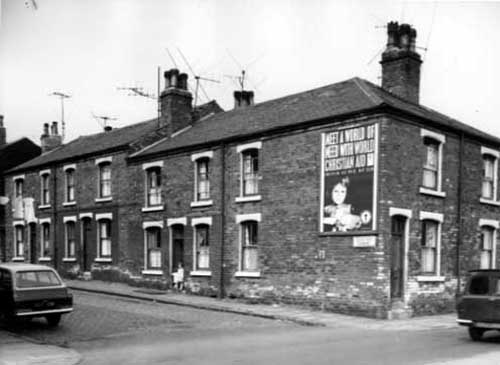
15th June 1967 Back-to-back houses on Clay Pit Street, numbers run from 6 to 2,
left to right. There is a billboard advertising Christian Aid week on the end of
this row, attached to the side wall of number 151 Oatland Lane the front of
which can be seen on the right. Oatland Lane was also known as Camp Road at this
time.
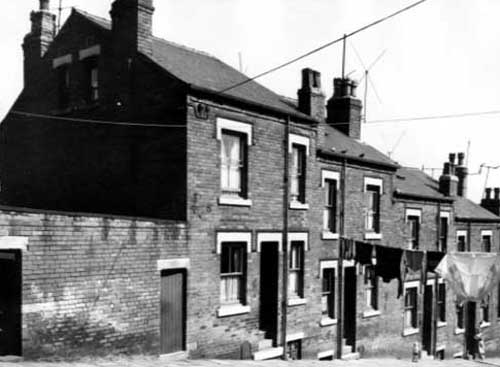
23rd June 1967 Even numbered back-to-back properties on Clay Pit Street. There
is an outside toilet block on the left edge followed to the right by numbers
running in descending order from number 40. Washing hangs across the street.
8. In July 2012 I was contacted by someone who had seen this article and said that John was honoured along with other VC holders in a memorial that is sited outside the Henry Moore Institute in The Headrow, Leeds. It is dedicated to those VC holders that were either born and/or died in Leeds
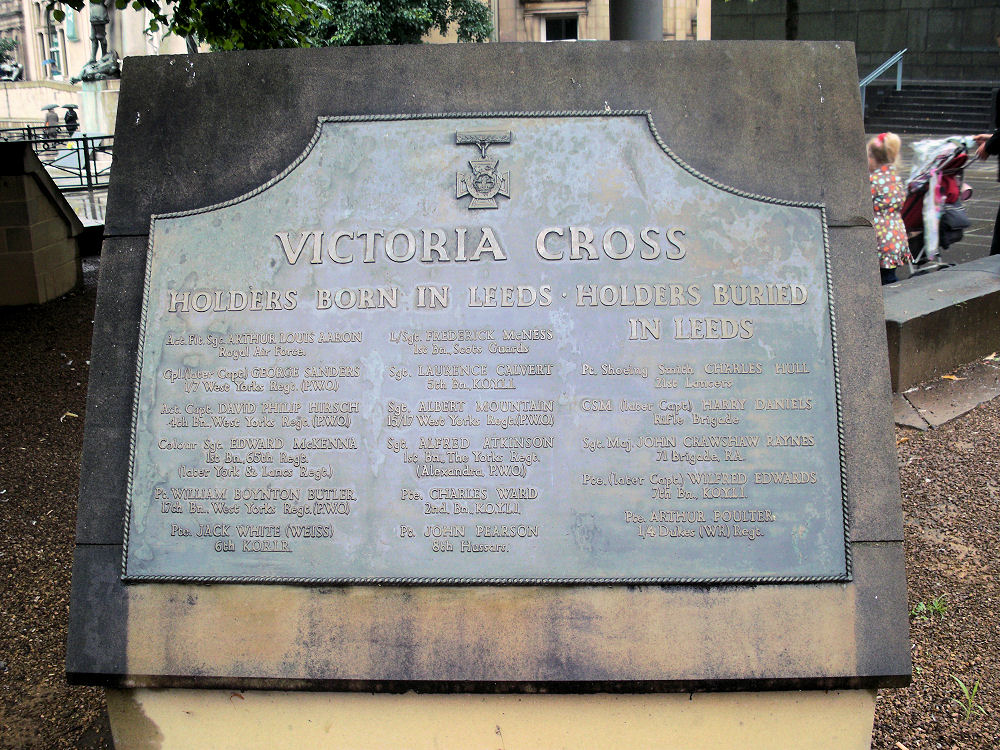
Photo kindly supplied by Ian Stubbs
9. From Beer Matters - April 2006 (CAMRA Publication) - a brief history of The Sheaf View
If anyone could furnish me with any further information on John, please contact me
Sources
UK Census
The London Gazette dated 18th November 1915 (11449)
"Fifty Years of Church Life 1866 - 1916" (Chapter 5 Heeley and The War)
The Times dated November 14th 1929
The Times dated November 18th 1929
Yorkshire Evening Post dated 14th November 1929
Yorkshire Evening Post dated 16th November 1929
Manchester Guardian dated 18th November 1929
Leeds Mercury 18th November 1929
Beer Matters - April 2006 (CAMRA Publication)
This page was last updated on 05/08/25 15:02