ETHEL THEODORA CLEGG MBE (1891-1972) - A LIFE
One of the earliest articles I posted to the site related to The Cleggs of Sheffield and their formidable endeavours in both their public and private lives. They were a pivotal family in the development of Sheffield in the ;ate nineteenth and early twentieth century and the figurehead was one William Johnson Clegg (1827- 1895).
In the book "The Making of Sheffield I865-1914 by J. H. Stainton (E. Weston & Sons, Change Alley, Sheffield 1924) the author points out that William was born on September 26th 1827 in Earl Street, the son of a small cutlery manufacturer. He was educated at Carver Street National School (established 1812) where the fee was 1d a week. He left the school at 12 years of age and started his business career at the the offices of Mr. Vickers (Solicitor) before becoming a Highway Rate Collector with the local Highways board. He moved on from that position and became an accountant at premises on Chapel Walk. However it was to be the aftermath of the Sheffield Flood of 1864 that was to prove the turning point in his life. Together with a Mr C. E. Broadbent he vigorously pursued claims against the Sheffield Waterworks Company for compensation on behalf of the victims of the flood and their families. The success he enjoyed in this work led William to leave his family in Sheffield and train to become a solicitor in London. Stainton, fully appreciates the single minded dedication that William showed in following ambitions which were rewarded when he returned to Sheffield in 1868 and established the firm of Clegg and Sons.
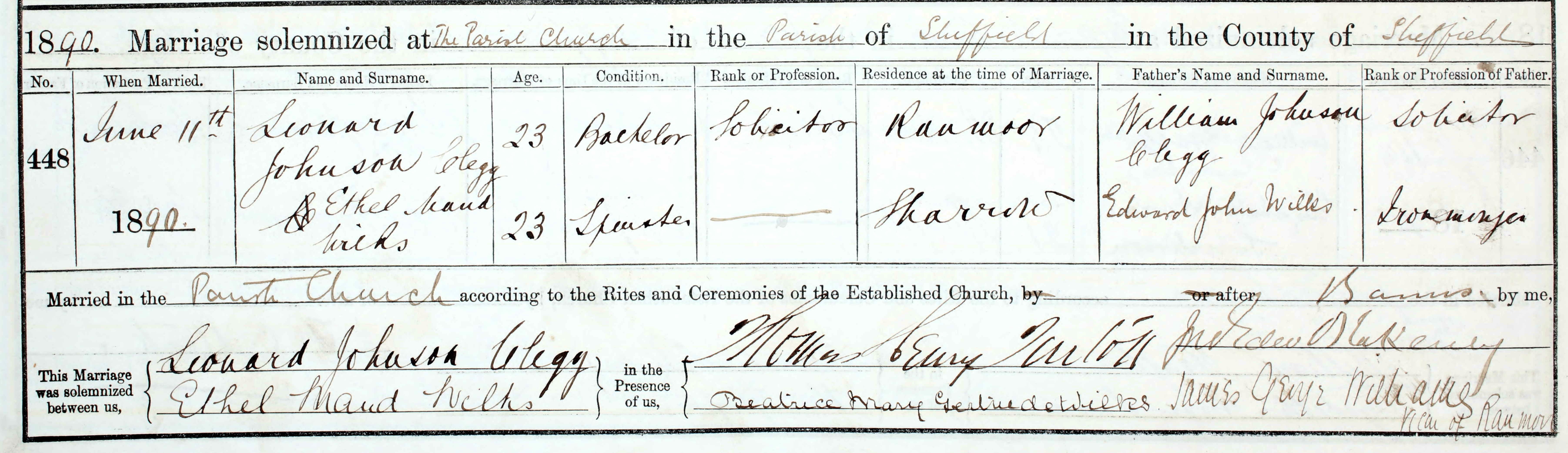
William's youngest son was Leonard Johnson Clegg and in 1890 he married Ethel Maud Wilks born May 26, 1867 , daughter of Edward John Wilks and Eliza Ann Reckless. (Edward John Wilks is one of the brother's in Wilks Bros. & Comp. of Sheffield).
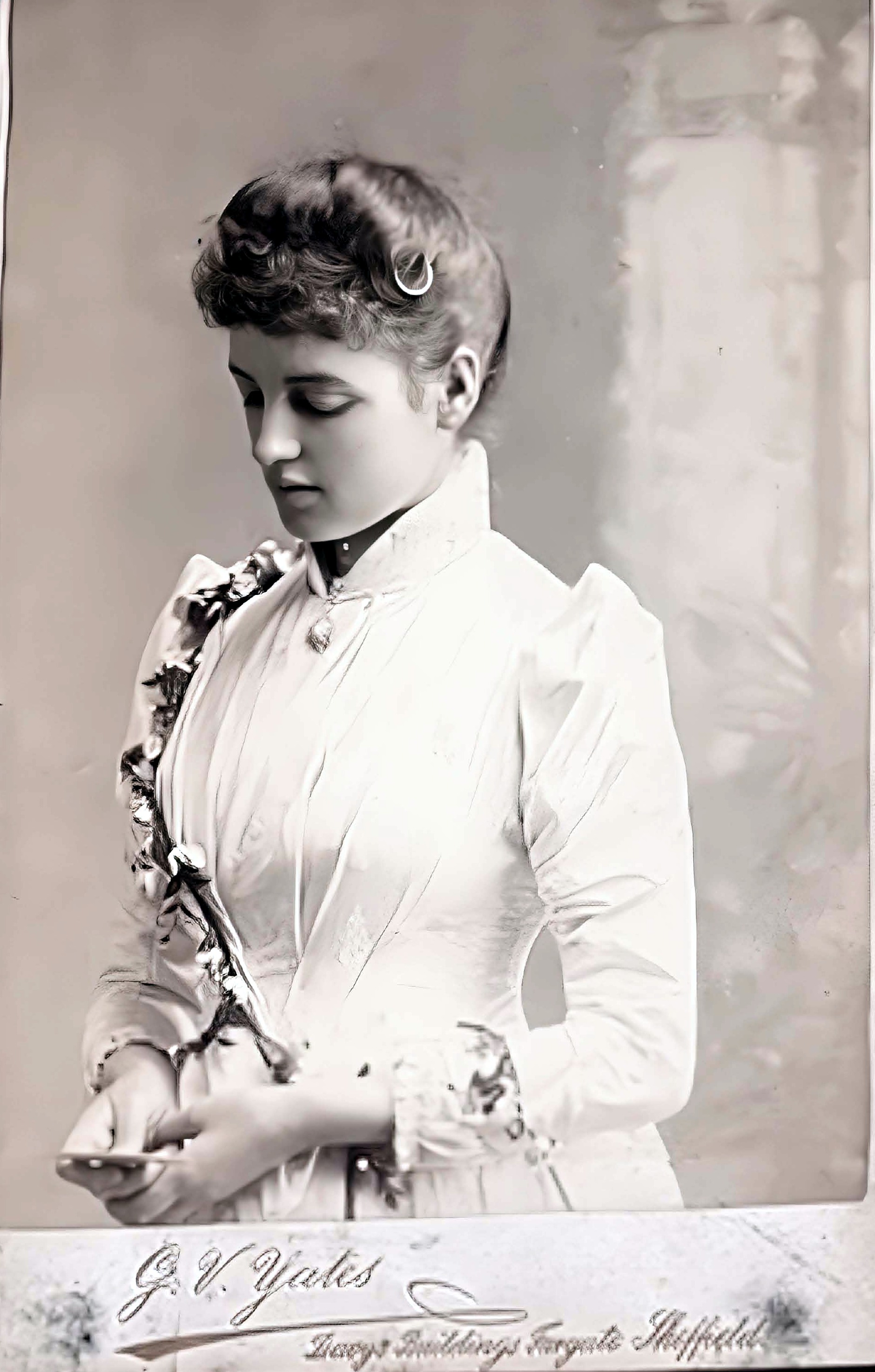
Ethel on her wedding day - June 11th 1890
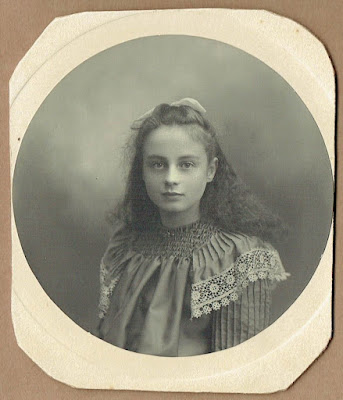
In 1890 Dora’s father Leonard married Ethel, a beautiful young woman aged 23. Nine months later she gave birth, prematurely, to Theodora in 1891 and sadly a week later Ethel died of “milk fever”.
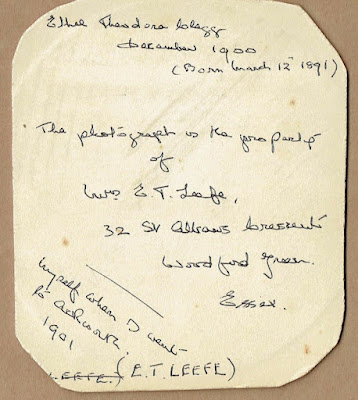
They had a daughter Ethel Theodora Clegg b. Mar. 12, 1891 in Ecclesall Bierlow, Sheffield. Ethel's mother Ethel Maud Wilks died March 19, 1891
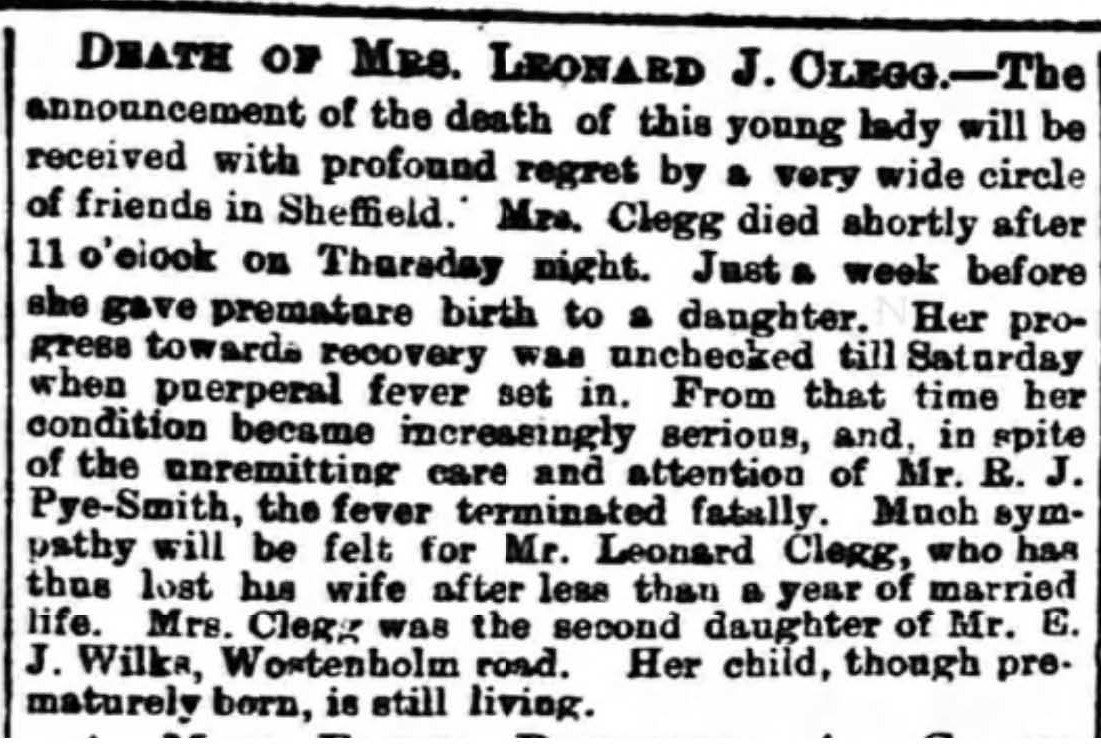
Sheffield and Rotherham Independent dated 21st March 1891
Now that the scene has been set so to speak, it is important to provide some background to this narrative.
In April 2026, I was contacted by a family history researcher who had strong connections to the family
"I just found your excellent website detailing some of Sheffield's fascinating history, well done on quite an endeavour.
I have recently finished researching my family history and discovered my Great Grandfather William Clark and his family lived and worked in Sheffield from 1911 - 1925. One of William's children (called William Spensley Clark) was engaged to Thoedora Clegg in 1914 but sadly he was killed on the first day of the battle of the Somme on 1 July 1916. Dora would go on to marry
a Thomas Oswald Leefe. Would you be interested in learning more about my Great Grandfather and great uncle, I would be happy to share what I managed to discover and for you to include in your website?
Please find some information about Dora Clegg that I managed to track down while I was researching my family history. Much of the information comes from the book written by Dora's adopted son Tindall Leefe entitled "A Second Pair of Eyes" which can be found in the British Library.
I have also attached some photos of Dora (that you may already have) and one of Willie Clark, her
fiancée who was killed at the Battle of the Somme. I hope you find this info interesting and useful"
Needless to say I accepted their kind offer with alacrity and so the following narrative is heavily based on the book written by Dora's adopted son Tindall Leefe entitled "A Second Pair of Eyes."
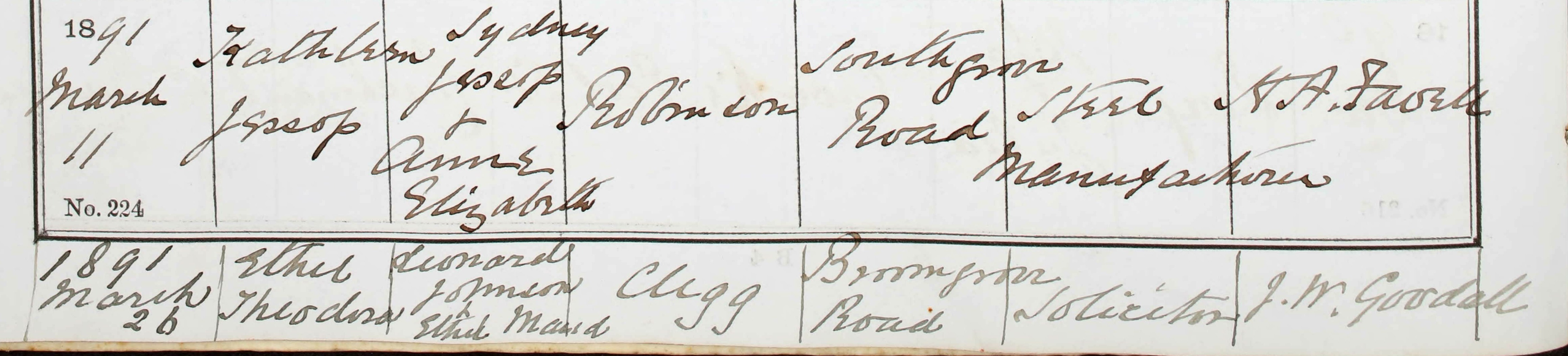

Dora was in fact christened twice on the same day in different churches miles apart! The first record is from St Mark's Church in Broomhill Sheffield (Leonard's local church) and the second is from the Parish Church at Dalton near Rotherham.
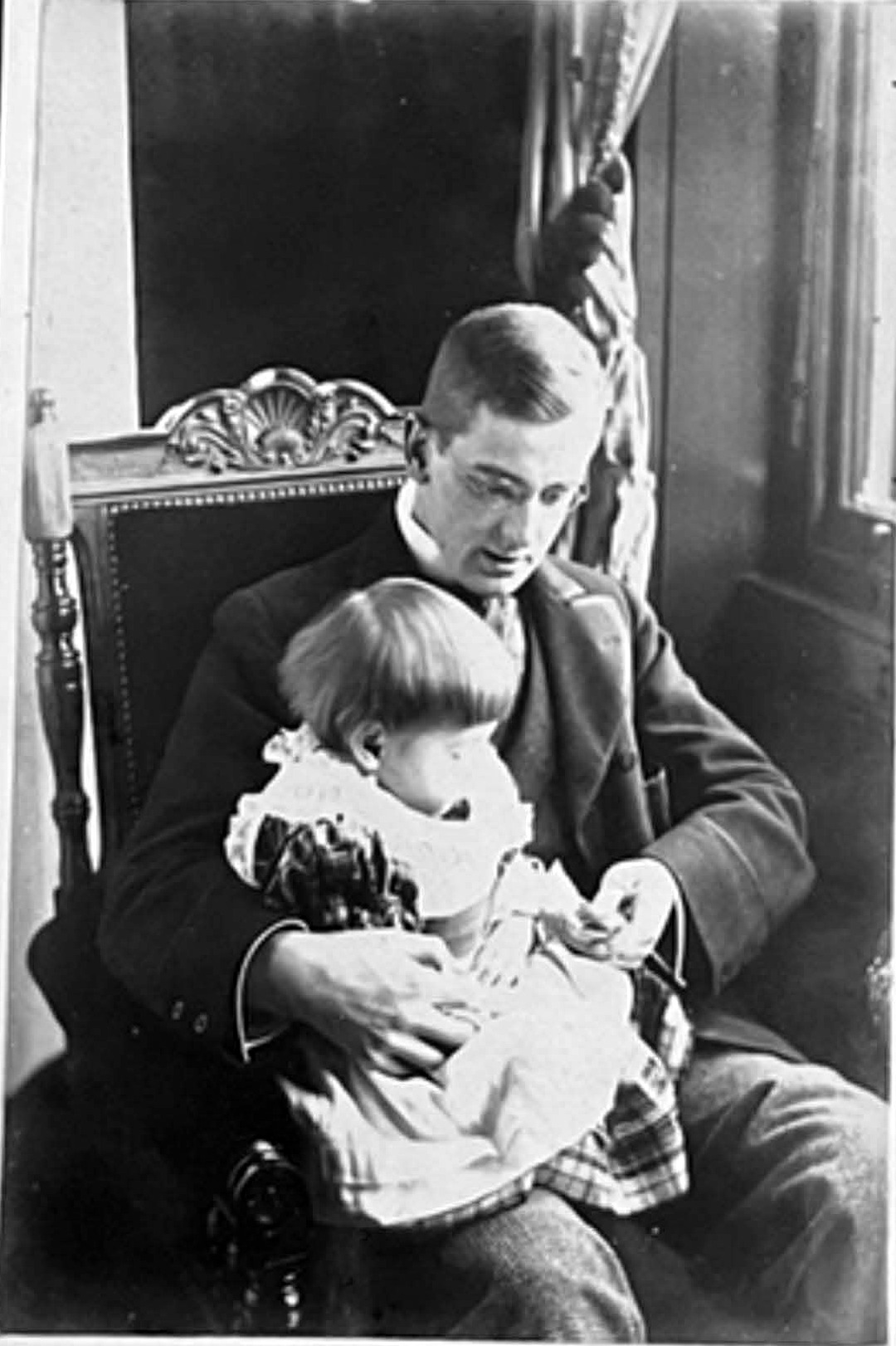
Ethel with her father Leonard 1902
Not expected to live Dora was quickly christened, however she survived and her father a young heartbroken widower eventually rallied and remarried. His new wife was an older woman and was reportedly not beautiful and she did not like Dora as she reminded Leonard of his first wife. So Dora was kept in the background, looked after by a nanny and was only allowed to be with the family (she now had a step brother and sister) when asked. As soon as possible Dora was packed off to Ackworth a Quaker boarding school at Buxton until she was 17, when she was then sent to a finishing school at Vevey in Switzerland.

1901 Census
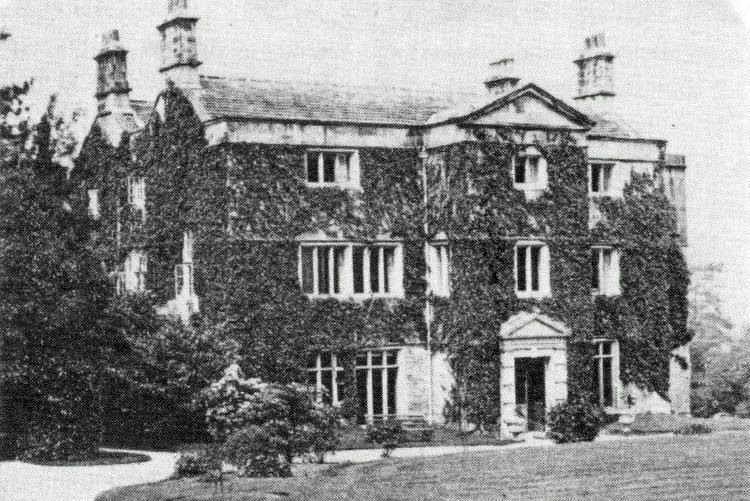
Whitely Wood Hall
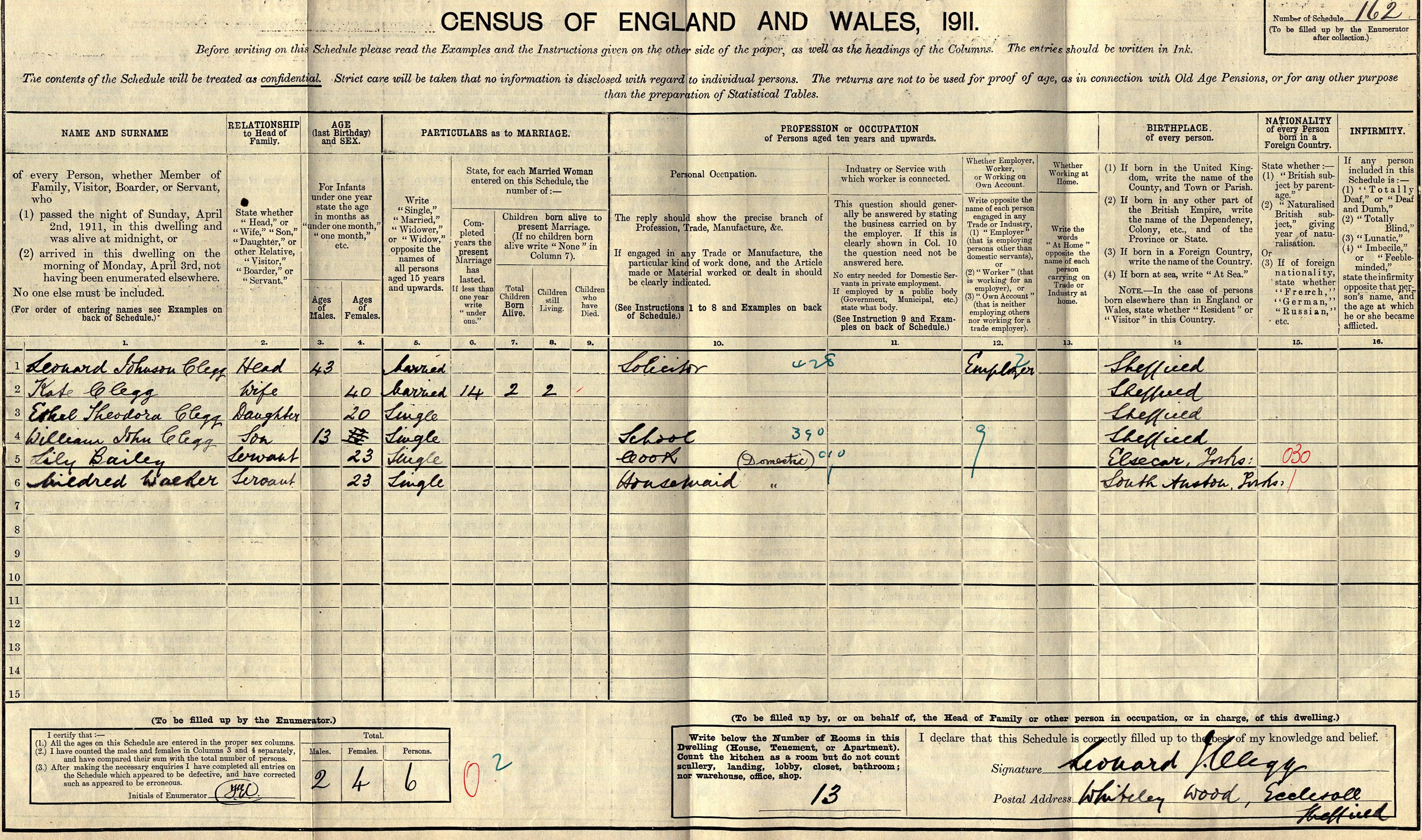
1911 Census
On her return to England she was expected to “come out” socially and received instruction on the rules of golf and bridge of which she had no interest, preferring rather drama having performed in a number of production while at school. As the theatre was not seen as a respectable activity for a young lady, Dora was required to give up this interest, however she was able to continue to pursue her interest in water colour painting. It seems the only common ground she found with her father was in books, as Leonard was by this time spending more and more time alone in his library, while his unhappy wife became angrier and suspicious of Dora’s private affairs; so much so she had a duplicate set of keys made so she could search Dora’s room and personal effects.
Around 1910 William Clark (my great grandfather) and his family moved to Sheffield from Glasgow when William became the Director of Vickers. The family moved into Whiteley Wood Hall in the Ecclesall area. William’s family included his wife Margaret and his daughter May Clark (my Grandmother) who was 20 and his youngest son William Spensley Clark aged 19, known as Willie.
Soon after arriving in Sheffield, May introduced her younger brother to Dora who lived on Whiteley Wood Road not far from the Hall. Willie managed to persuade Dora to meet him secretly at the bottom of her drive when she went out to ‘post a letter’ and they would then go for rides into the countryside on his motorbike. When Dora’s parents found out about the relationship they were not impressed, however once her stepmother discovered Willie’s father was the Director of Vickers, she changed her tune and found the liaison “most acceptable” and it was actively encouraged.
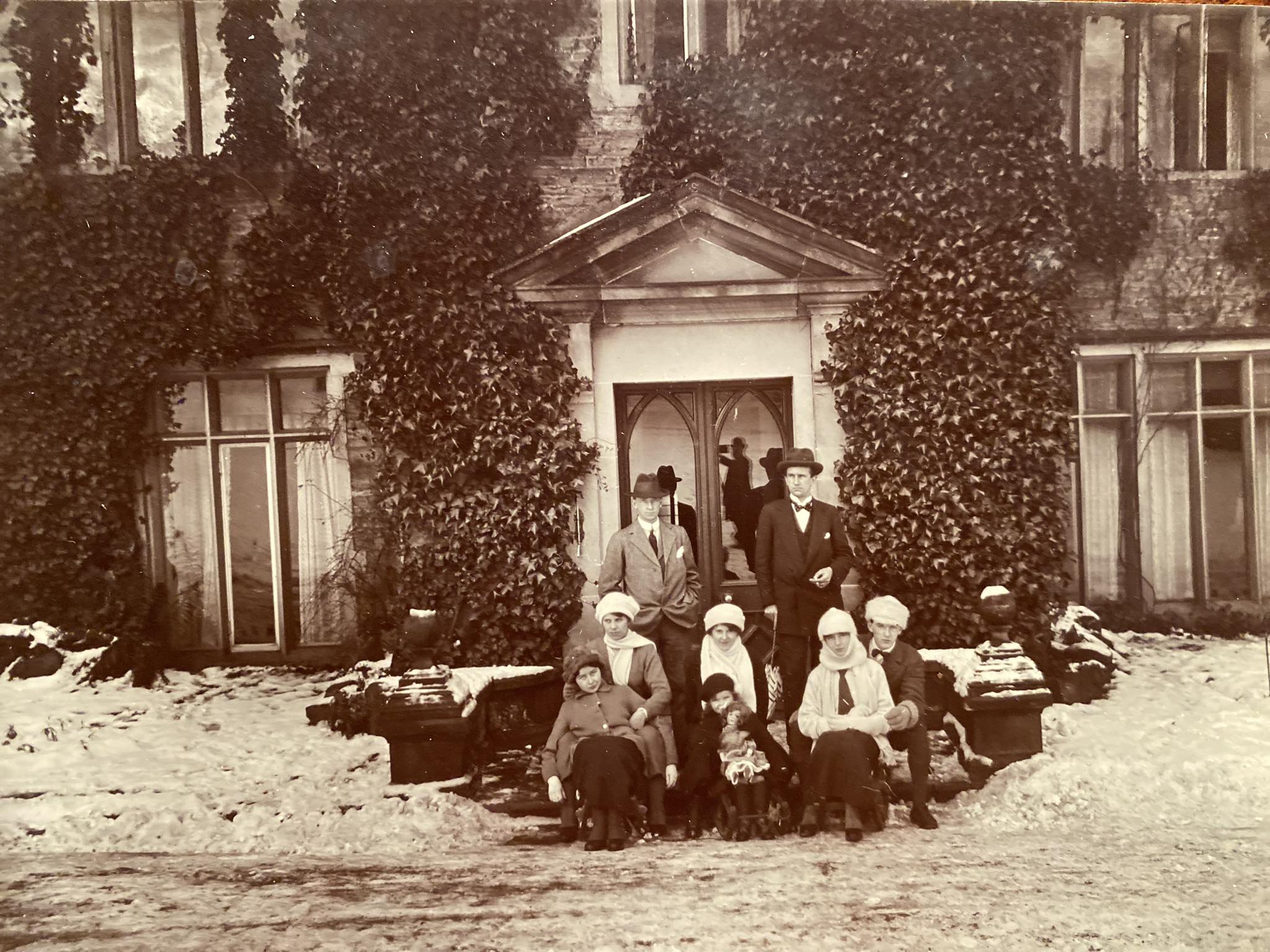
Clark Family Whitely Wood Hall
Around 1912 Willie changed his career from studying medicine and became an engineering student at Vickers, studying with the company and at the University of Sheffield where he also joined the Officer Training Corps. His relationship with Dora continued to flourish and in October 1914 the young couple both now 22 were engaged with Dora giving Willie a signet ring with his initials “WSC” on the crown and the inscription “Dora Oct 1914” on the inside.
On the outbreak of the First World War Willie joined The York and Lancaster Regiment, 12th (Sheffield) Battalion “The Sheffield Pals” along with Eric Moxey who was going out with Willie’s sister May, he would become my Grandfather.
After a year of training the Battalion was sent to Egypt in January 1916 and then to France in mid-1916. The Sheffield Pals would take part in the Battle of the Somme and Willie who by this time was the Officer Commanding A Company and led that first attack on 1st July 1916
As with so many young men that day Willie was cut down by the German machine guns in the opening minutes of the assault and his body was left hanging on the wire short of the German lines. His body would remain in No Mans Land until February 1917 when the Germans withdrew to the Hindenburg line. The gruesome task of burying the bodies from the Battle could now begin, Willie’s body was not initially identified and instead his remains, along with pieces of officers’ clothing and buttons, two pairs of boots and two officers’ ties, were buried in a coffin that he shared with a fellow officer of the Battalion, under the epitaph “two unknown British officers of the York and Lancs”.
However, a signet ring was found on one of the bodies and returned to Battalion HQ. The ring had the initials WSC on the crown and the inscription “Dora Oct 1914” on the inside; this was the ring that Dora had given Willie on their engagement 18 months earlier and enabled Willie’s body to be identified as one of the officers in that shared grave.
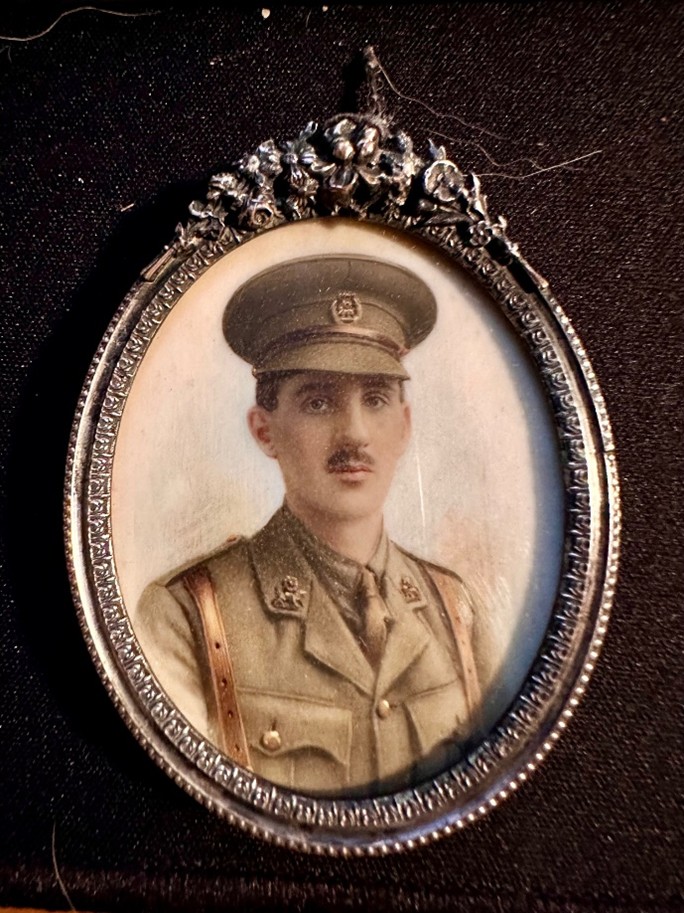
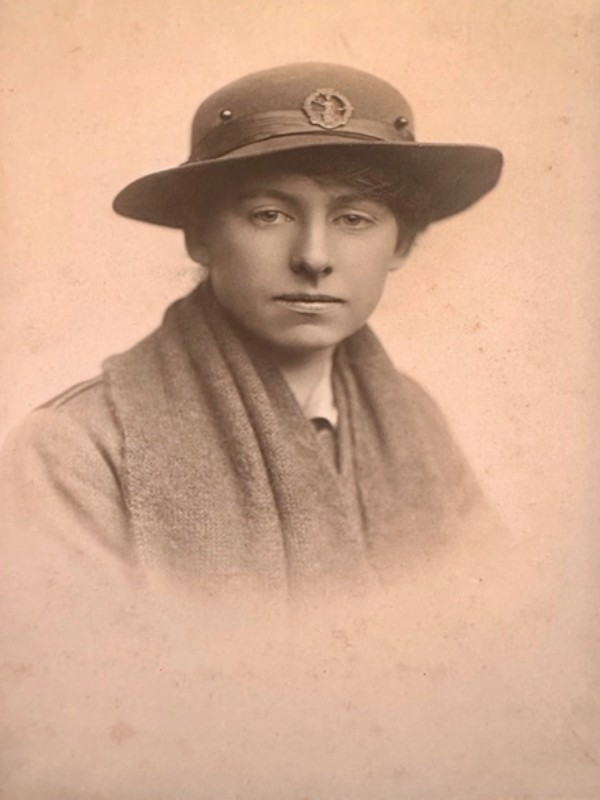
Willie and his fiancée Dora had been so close in spirit that she knew the exact moment he was killed and for the rest of her life she kept as treasured possessions her engagement ring, his miniature framed photograph and a lock of Willie’s hair together with the last letter she received from him on the eve of the battle hastily scribbled on a scrap of paper.
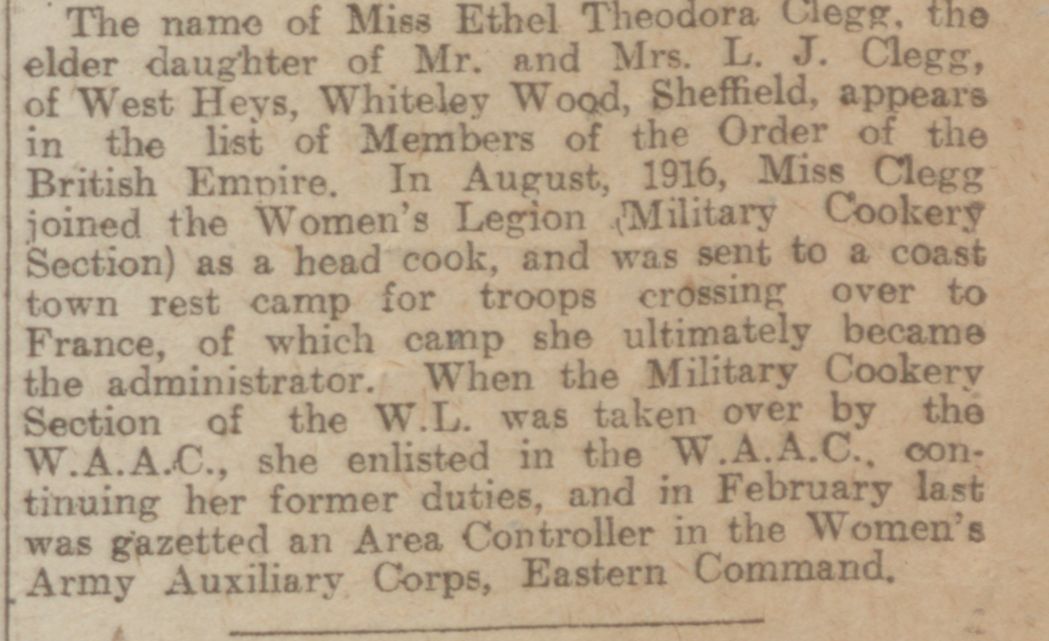
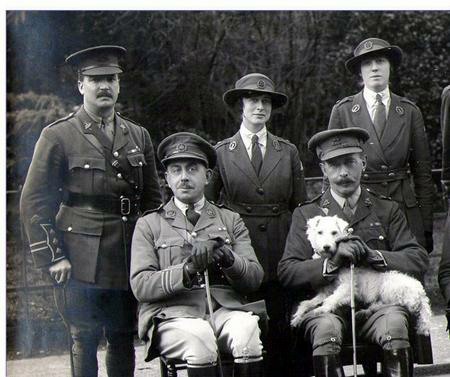
To help her deal with the loss of her fiancée Dora started to work for the Queen Mary’s Army Auxiliary Corps, eventually moving to Kent and holding the position of Area Controller at the Chatham Barracks and on 7th June 1918 she was awarded an MBE in recognition of her work.
After the war in around 1920, Dora was introduced to Thomas Leefe and discovered that he had been in A Company under the command of Willie at the Battle of the Somme. Thomas had been seriously wounded losing his sight during the attack and after three days crawling around NML from shell hole to shell hole he was eventually taken prisoner by the Germans and treated in hospital. Once his injuries allowed Thomas was repatriated to England in October1916 and discharged from the Army on 7th February 1917.
On a trip to Sheffield in 1920 to see Dora’s parents, Thomas was invited to Whiteley Wood Hall to meet Willie’s mother and father and he remarked that they were charming, unassuming people. While there Thomas was able to tell William and Margaret that their son was last seen standing on top of the front line parapet, twenty yards ahead of his men, waving them forward and he was able to reassure them that Willie was highly respected by his men and had an overwhelming sense of duty.
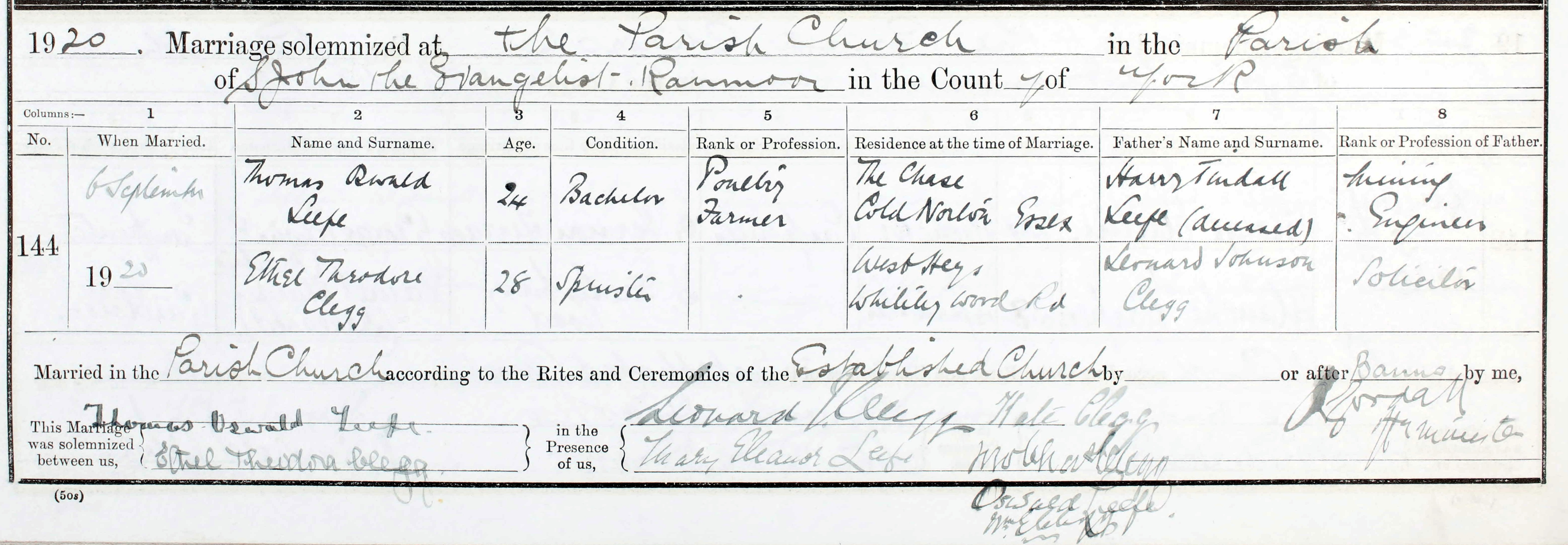
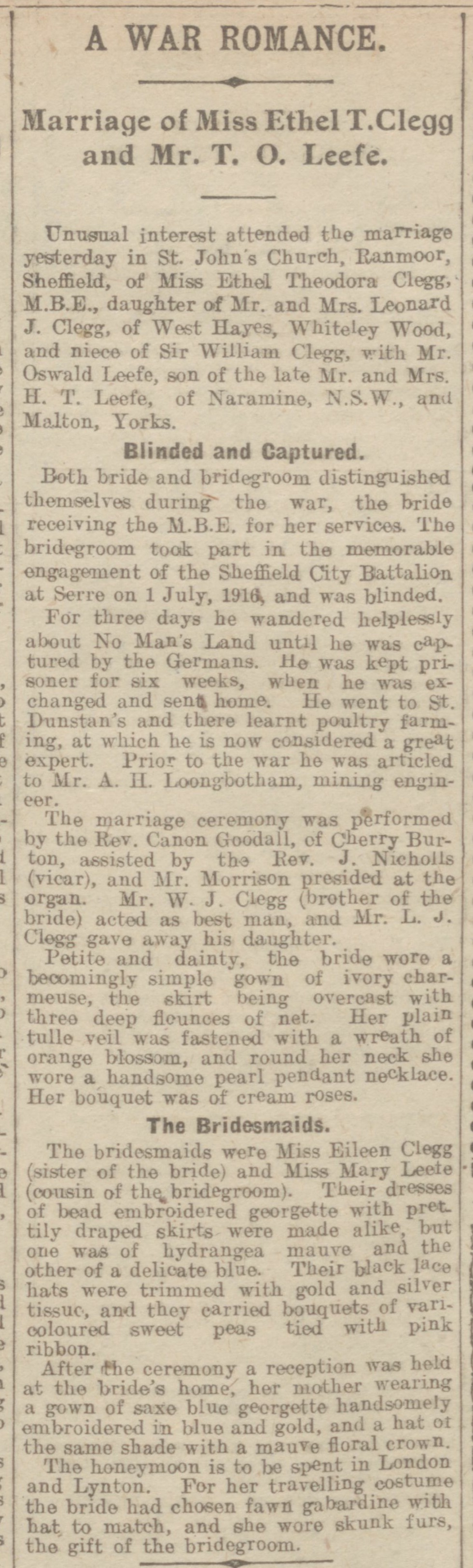
After a brief engagement Dora and Thomas were married on 6th September 1920, although outsiders could see that neither was truly in love, while Thomas’ aunt warned him that the marriage would come to nothing and Dora’s father made his disapproval and open dislike of Thomas as obvious as possible.
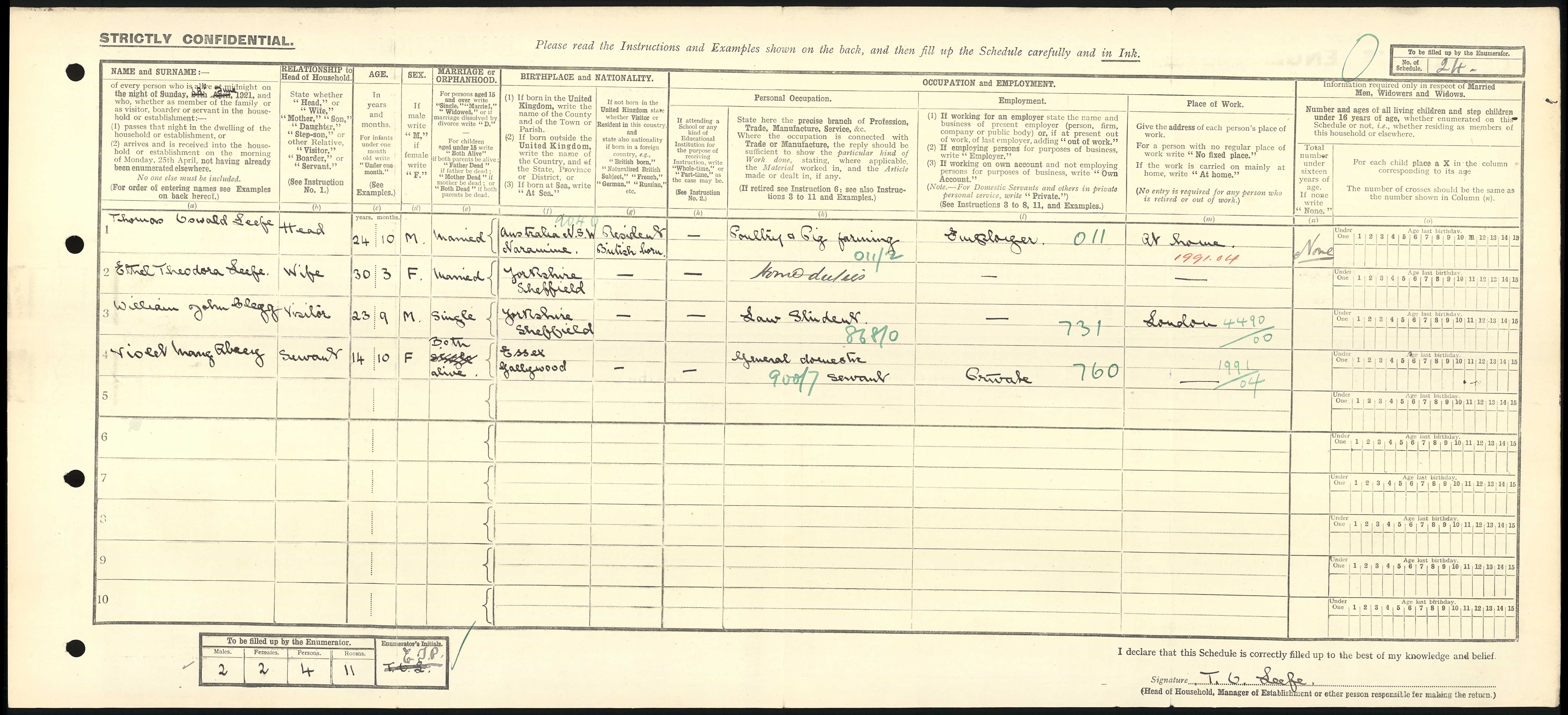
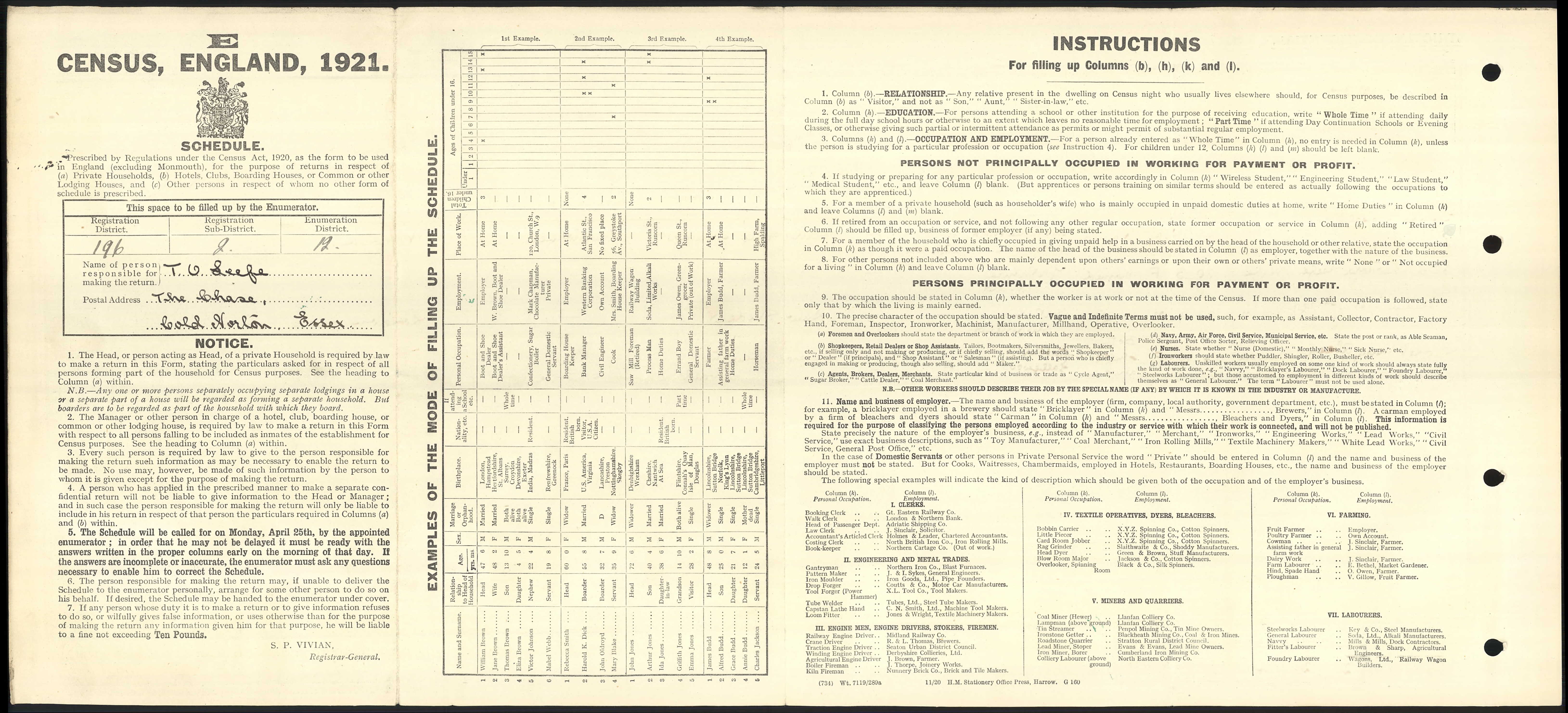
1921 Census
Sadly they were to be provided right and the marriage would not be a happy union, after Dora had a miscarriage they adopted a son, Tindal Leefe, who in 1981 wrote a book about his father’s life entitled “A second pair of eyes”.
By 1930 the situation between the couple was so dire that they separated and Dora, who had stayed in touch with May Clark (now May Moxey having married Eric Moxey in 1917) having become good friends while she was engaged to Willie, moved up to Edgbaston and rented the top floor of Eric and May’s house on Augustus Road living with them for the next four years. While at Augustus Road Dora converted one of the rooms into a small factory where she made chocolates selling them to the wealthy neighbours.
In 1934 the Leefe’s were reunited when Thomas and Tindal moved up to Birmingham staying together for the rest of their days.

1939 National Register
Notes
Captain WILLIAM SPENCLEY CLARK
Regiment & Unit/York and Lancaster Regiment "A" Coy. 12th Bn.
Date of Death Died 01 July 1916 Age 24 years old
Buried or commemorated at SERRE ROAD CEMETERY No.2 XXXIX. J. 7/8. France
Commonwealth War Graves Commission -
Additional Info Son of William and Margaret Kirkwood Clark, of Whiteley Wood Hall, Sheffield, now Annet House, Skelmorie, Ayrshire.
Sources
Sheffield and Rotherham Independent dated 21st March 1891
UK Census
Ancestry
This page was last updated on 13/04/26 14:56